

Samsung refrigerator dispenser cleaning covers the parts you can reach without any tools: the tray under the dispenser, the nozzle and chute area, and the ice bin. Wipe the tray and the dispenser recess with a damp cloth and mild soap, empty and wash the ice bin as your owner’s manual shows, and let everything dry before you refit it. The ice maker mechanism and the water lines behind the dispenser are not owner jobs. A dirty dispenser causes bad-tasting ice and drips, and it is the first place to look when ice or water seems off. How the bin comes out differs from model to model, so follow the manual for the release steps.
How do you clean the dispenser tray and nozzle?
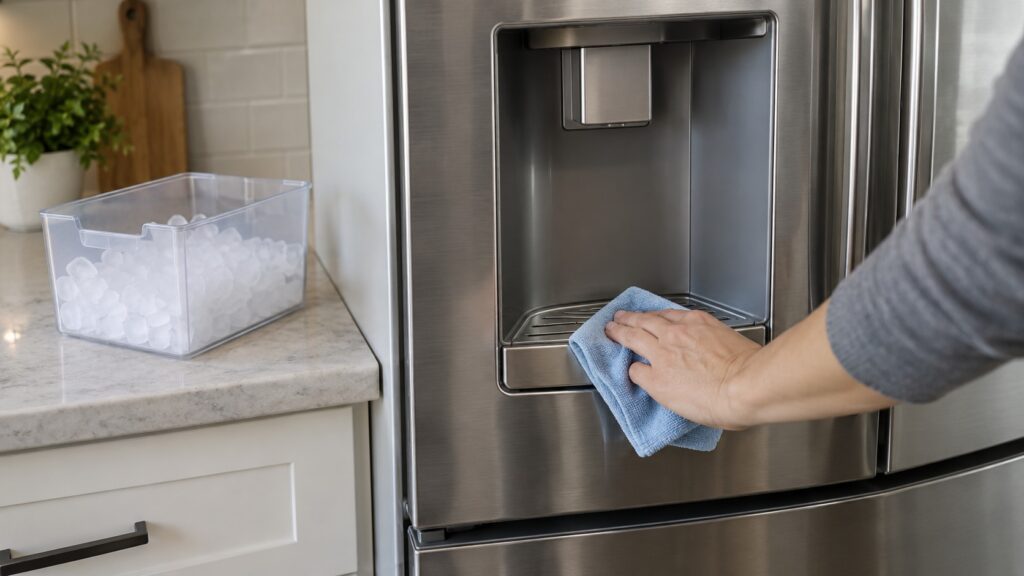
Start with the part you see most. The tray under the dispenser catches drips, and it collects dried splashes, mineral spots and sometimes mildew. Wipe it with a soft cloth dampened with warm water and a little mild dish soap, and if the tray lifts out as the manual shows, wash it in the sink and dry it. Wipe the recess behind and around it, the dispenser paddle and the visible rim of the nozzle. Use a soft toothbrush for crevices. Do not push anything into the nozzle or the ice chute, and do not spray cleaner into the opening, because liquid can run into parts that should stay dry. Dry everything afterward so water does not freeze in the chute and cause a jam.
A tray that is always wet is a hint. If the dispenser drips after you release the lever, the cause may be a normal drip after use, a filter that was not seated or a valve problem, and that is covered in the last section.
How do you clean the ice bin?
Take the bin out as the owner’s manual shows for your model. On many refrigerators it is a simple lift and release, but do not force it. Empty the ice, throw it away and let the bin come to room temperature before washing so cold plastic does not crack in hot water. Wash it with mild soap and warm water, rinse and dry fully. Look at the inside of the compartment while the bin is out, and wipe the visible surfaces with a damp cloth. Do not touch the mechanism that makes or moves ice; it sits near moving parts and wiring. Refit the bin until it seats, close the door and let the ice maker refill it. Discard the first batch of ice after cleaning, as it can carry traces of soap or taste of cleaning.
The other reason to empty the bin is a clump. Ice that has stuck into a solid mass can stop the dispenser from working, as the site’s ice maker won’t dispense page describes. Break up a clump by hand, gently, and do not use a sharp tool.
How often should you clean the dispenser and bin?
Wipe the tray when you see drips and spots, and give the bin a full wash when you do a refrigerator clean-out. If you use little ice, empty the bin now and then, since old ice absorbs odors from the freezer and tastes stale. Our guide on how to maintain a Samsung ice maker puts the whole routine in one place. Change the water filter on the schedule in your manual, because a filter that is overdue affects both taste and flow. After a filter change, run water through the dispenser as the manual says to clear air from the line.
Why does ice taste bad or the dispenser make noise?
Ice picks up odors from the freezer, so strong food stored uncovered can flavor it. A dirty bin, an old filter and mineral buildup also contribute. See the site’s ice tastes bad page for more. Noise when you dispense water is often the valve opening and water moving through the line, which is normal, but a loud hammering, grinding or a sound that continues after you release the lever is not. Do not open panels to find the cause. If a dispenser noise comes with a leak, a smell of burning or water at the outlet, switch off the breaker at the panel while standing on a dry floor and do not pull a plug from a wet outlet.
When does cleaning point to a real fault?
Cleaning will not fix a dispenser that drips constantly, a bin that stays empty, ice that is hollow or a chute that freezes shut again after you clear it. Frost and ice around the ice maker suggest a freezing-up problem, which our Samsung ice maker freezing up guide covers, and if the ice maker is not working at all, read the Samsung ice maker troubleshooting guide. Water that leaks under the refrigerator may involve the supply line, and our Samsung refrigerator water line installation guide shows how it should be connected. For a technician, see our ice maker repair page.