















































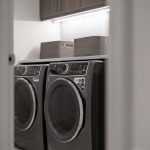
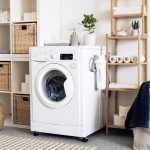
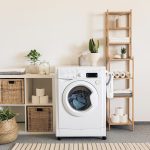
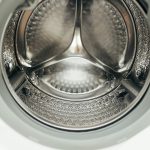



Samsung’s washer lineup splits by drum design in the model prefix: WA marks a top-load machine such as the WA50R5400AW, WF a front-load machine such as the WF45T6000AW, and WV the FlexWash design that stacks a full-size front-load washer over a smaller top-load companion drum so two loads can run at once. Bespoke AI models extend the WF line with changeable panel colors and on-panel cycle guidance.
The characters after the prefix are not random: they encode tub capacity (the “50” and “45” above track roughly to a cubic-foot class), the design generation, the feature tier, and a finish suffix like AW for white or AV for a darker cabinet. Feature names such as AddWash (a door-in-door hatch for adding items mid-cycle), Super Speed, AutoFill for pretreating, VRT Plus vibration reduction, and Self Clean are layered onto these platforms rather than forming separate model families. The rating plate that carries the full model and serial number is on the door frame of a front-load machine, visible with the door open, or under the lid on a top-load machine. Alongside it, the serial number encodes the build date, so a technician can tell an early WA50 run from a later one at a glance and pull the matching revision of a part.
That full model-and-serial string matters because Samsung revises control boards, drain pumps, drive belts, and door-lock assemblies across model years within the very same prefix, so two machines that look identical can take different parts; the serial also tells a technician which generation’s service procedure applies. Record the complete number before you book washer repair for a clear, upfront quote, and the right part can be confirmed the first time.