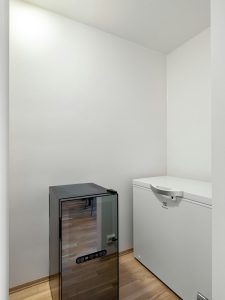
Samsung’s freezer error codes are limited to the shared refrigerator control-board family, and a “not freezing” complaint on its own doesn’t correspond to a documented Samsung code — it’s a symptom worth working through methodically rather than an error code to look up.
Where to Start Looking
- The temperature setting may have been bumped, especially on models with an exposed digital control panel
- A door that isn’t sealing fully, letting cold air escape and warm air in continuously
- Condenser coils on the back or underside of the unit coated in dust, restricting heat exchange
- Frost buildup on the evaporator coil blocking airflow, common on freezers overdue for a defrost cycle
- The unit packed too full or too empty, both of which affect how air circulates internally
What You Can Check
Confirm the temperature display actually reads the setting you expect, and adjust it a few degrees colder to see if performance improves over several hours. Run your hand around the door gasket while the door is closed, feeling for any spot where cold air is escaping — a dollar bill closed in the door that pulls out easily also indicates a weak seal. If the condenser coils are accessible, vacuum off any visible dust buildup.
Give the freezer 24 hours after any adjustment before judging results, since internal temperature changes gradually.
When to Call a Technician
If temperature, door seal, and coil cleaning don’t restore freezing performance, the compressor, sealed refrigerant system, or evaporator fan likely needs professional diagnosis. Our Samsung freezer repair technicians pinpoint the cause with proper testing equipment rather than guesswork.
This is an independent repair service and is not affiliated with Samsung.