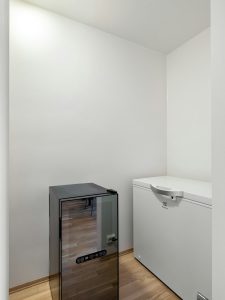

A Samsung freezer’s defrost drain carries the water produced during each automatic defrost cycle away from the evaporator coil and out through a hose to a pan near the compressor, where it evaporates. When that drain line ices over or clogs with frost debris, the meltwater has nowhere to go, and it backs up into the freezer as a puddle, a sheet of ice on the floor of the compartment, or frost building up around the back wall. Keeping the drain clear is one of the simplest maintenance jobs on the whole appliance, and one of the most commonly skipped. This Samsung freezer defrost drain maintenance guide covers how the drain clogs, how to clear it safely, and how often to check it before it turns into standing water.
What causes a Samsung freezer defrost drain to clog?
The drain clogs for one of two reasons: frost and ice building up inside the drain tube itself during the defrost cycle and re-freezing before it fully drains, or food debris and packaging residue that collects near the drain opening over months of normal use and eventually blocks the path. A door left slightly open, even briefly and often, adds extra humid air that increases frost buildup throughout the freezer and speeds up how quickly the drain area ices over. This is why the same freezer can go a year without an issue and then develop a drain problem within a few weeks after a spell of frequent door openings or a hot, humid stretch of weather.
How do you know the drain — and not something else — is the problem?
Water pooling specifically on the floor of the freezer compartment, or a sheet of ice forming along the back or bottom wall, points at the drain rather than at the door seal or the thermostat. Compare that to water appearing under or in front of the appliance on the kitchen floor, which more often points at the water line connection if the unit has an icemaker, or at a door seal that is not closing fully. If the freezer is also running warmer than usual at the same time water is pooling, the drain blockage may be interfering with the defrost cycle enough to affect temperature, which is worth mentioning if you end up scheduling a repair visit.
It also helps to note when the water shows up. Pooling that appears a few hours after the compressor has been running steadily, right around when a defrost cycle would normally fire, points squarely at the drain. Water that is present constantly, regardless of the compressor cycle, is more consistent with a door seal that never fully closed or a unit that was not leveled correctly during installation.
How do you clear the drain yourself safely?
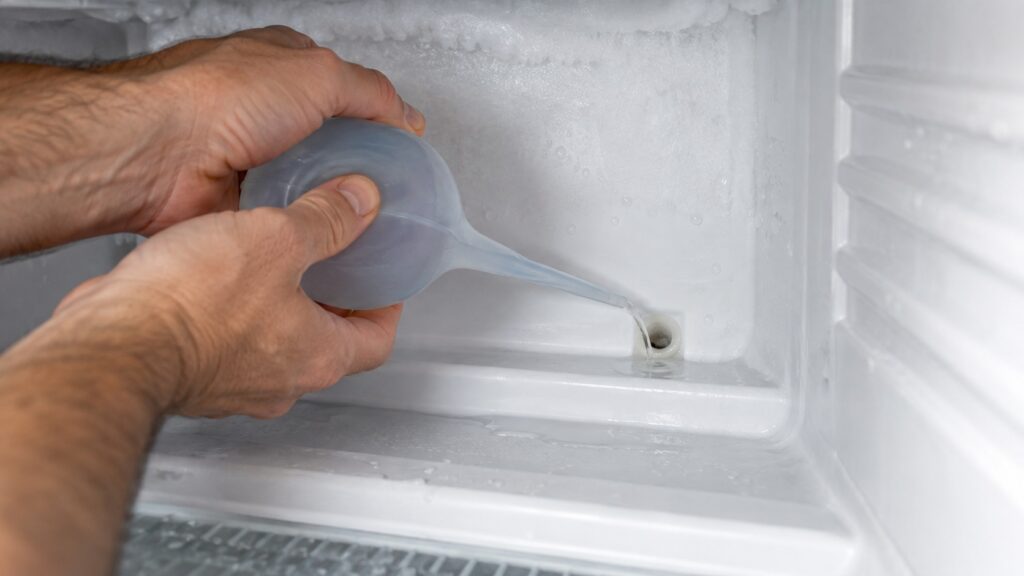
Unplug the freezer first, then locate the drain opening — on most Samsung freezers it sits in the back interior wall near the bottom, sometimes behind a small cover. Flush the opening with warm (not hot) water using a turkey baster or bulb syringe, aiming directly into the drain hole, and repeat a few times to work through any ice without forcing anything. If water will not pass through at all, a length of soft tubing gently fed into the opening can help clear a debris clog without risking damage to the coil behind it. Avoid using a metal wire, coat hanger, or pick to clear the line — the evaporator coil sits close behind the drain path, and a rigid tool can puncture it, turning a simple maintenance task into a refrigerant leak.
How often should you check the drain, and can you prevent the clog?
Checking the drain every three to four months is enough for most households, though a freezer in a humid kitchen, one that gets opened frequently, or one that is kept very full (which restricts airflow and increases frost) benefits from checking closer to every two months. Keeping the door seal clean and fully sealing, avoiding long stretches with the door held open, and not overpacking the compartment all reduce how much frost the defrost cycle has to clear each time — which in turn reduces how much water the drain has to carry and how quickly debris accumulates at the opening.
What if flushing the drain does not fix the pooling?
If warm water will not pass through the drain opening at all, or if the pooling returns within days of a successful flush, the blockage may be deeper in the line than a home flush can reach, or the defrost heater and its timer may not be running the defrost cycle correctly in the first place — a drain that never gets a proper meltwater flow can look clear even when the real fault is upstream. Either situation is worth a professional look rather than repeated flushing, since removing the rear panel to access the evaporator coil area involves parts that are not designed for casual disassembly. For general upkeep beyond the drain, see our freezer maintenance guide, and if pooling is paired with a freezer that will not hold temperature, our freezer troubleshooting guide covers that side of the problem.
We are an independent Samsung repair service, not a factory service arm, and our technicians can access and clear a deeper drain blockage without risking the evaporator coil. If flushing has not resolved a recurring puddle or ice buildup, schedule Samsung freezer repair and we will confirm the cause before any part is replaced.