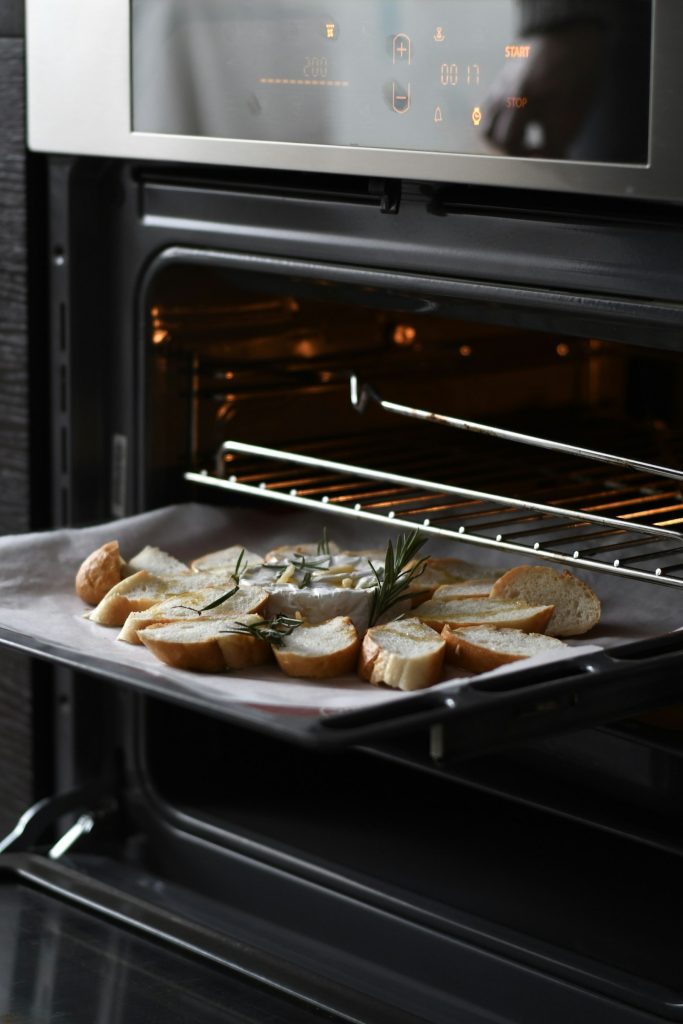
Samsung wall ovens display the same C-xx MICOM error code family used across Samsung’s cooking lineup, since the control platform is shared between ranges and built-in ovens. Here’s how to read the codes you’re most likely to see on an NV or NQ oven. This guide is independent and not affiliated with Samsung.
Communication codes
C-F0, C-F1, and C-F2 indicate the main control board has lost communication with the display or a relay board. This is often a connector or wiring harness problem rather than a dead board — check that all ribbon cables and connectors behind the control panel are fully seated before assuming the board needs replacement. A brief power cycle (shutting off the breaker for the oven for about a minute) sometimes clears a code that was triggered by a momentary power fluctuation.
Door and latch codes
C-d0, C-d1, and C-d2 point to the door switch or latch assembly, most commonly triggered when the self-clean cycle can’t confirm the door has locked. If this code only appears when starting self-clean, focus on the latch motor and door switch. If it appears during ordinary baking, a stuck button on the control panel is more likely than the door itself.
Temperature sensor codes
- C-20, C-21, C-22: the oven temperature sensor (RTD probe) is reading outside its expected range. Test the sensor’s resistance against Samsung’s published specification before replacing it, since a wiring failure at the connector can produce the same code.
- C-10: a self-test failure during the sensor’s startup diagnostic. Treat it the same as C-20 through C-22 for troubleshooting purposes.
- C-24: the oven is heating faster than expected, or the exhaust vent is restricted. Check for blocked vents around the control panel or top trim before condemning the sensor.
Stuck button codes
A bare “d0” without the “C-” prefix generally means a specific button on the touch panel is stuck or shorted, separate from the door-related C-d0 code. Pressing each control individually can help isolate which key is the source before a control panel replacement is scheduled.
Double oven considerations
On double wall ovens, confirm which cavity the code applies to — upper and lower cavities often have separate sensors and sometimes separate boards, and a code display doesn’t always make clear which section triggered it without checking the manual for your specific model.
When a code clears itself
Occasionally a code triggered by a brief power fluctuation clears after a full power cycle and does not return. If a code disappears after resetting power and the oven runs several cycles normally afterward, it’s reasonable to treat it as a one-time event rather than schedule a repair immediately — but keep an eye out, since a code that returns even intermittently is worth having checked properly.
Codes that don’t match Samsung’s oven set
If your display shows a bare E0 through E5 with no “C-” prefix, or a code style that doesn’t match the C-Fx, C-dx, or C-2x patterns above, recheck the display closely — dim or partially lit segments on an older display can make characters easy to misread, and codes outside Samsung’s documented set for wall ovens should be treated with skepticism rather than assumed accurate.
Getting it fixed right
Sensor and door codes are usually clear-cut once the part is confirmed bad through testing, but communication problems deserve a proper harness check first to avoid replacing a board that wasn’t actually the problem. Visit our oven repair service page to schedule a diagnostic visit, and see our oven error code reference for more detail on specific codes.
This guide is provided by an independent appliance repair service and is not affiliated with, endorsed by, or sponsored by Samsung Electronics.