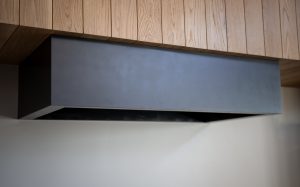
Poor venting on a Samsung range hood — smoke and odors lingering instead of clearing, or noticeably weaker suction than when the hood was new — isn’t something Samsung assigns an error code to. It’s a symptom the NK series guidance addresses directly, since airflow problems are usually mechanical rather than electronic.
What typically chokes airflow over time
A hood that runs but doesn’t move air effectively is almost always losing performance somewhere between the intake and the exterior vent outlet, rather than suffering an electrical problem. Common culprits include:
- Grease-saturated filters that have never been cleaned or replaced, which restrict intake significantly even with the motor running fine
- A ducting run that’s crushed, disconnected, or has too many tight bends for the blower to push air through effectively
- A backdraft damper stuck partially closed, often from grease buildup, that’s throttling exhaust even when the fan is at full speed
- A blower motor that’s still running but has lost speed or power due to wear
What to check first
Remove and wash the metal mesh or baffle filters — this alone resolves a large share of venting complaints, since grease-loaded filters can cut airflow dramatically without the motor ever showing a problem. Trace the duct run if accessible and check for obvious crushing, disconnected joints, or excessive length beyond what the hood’s motor is rated to push. Confirm the exterior vent cap opens freely and isn’t blocked by debris, nesting, or a stuck damper flap.
If filters are clean and ductwork looks intact but suction is still weak compared to when the hood was new, the blower motor itself has likely lost efficiency and needs inspection. That’s an internal component best diagnosed by a technician who can measure actual airflow rather than judge by feel.
Our range hood repair service covers Samsung airflow and blower diagnostics. Manufacturer resources: samsung.com/us/support.
Independent resource — not affiliated with Samsung Electronics.