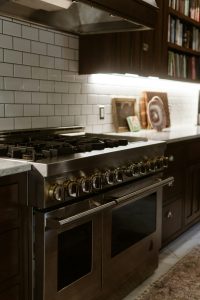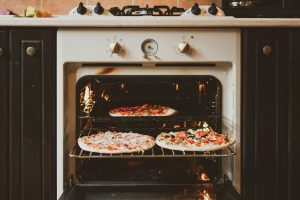
A Samsung wall oven (NV/NQ series) gets less daily wear than a full range since it’s dedicated to baking and roasting rather than stovetop cooking, but the same fundamentals apply: keep grease from accumulating and keep the door seal in good condition, and most sensor and airflow-related problems never come up.
Monthly
- Wipe down the oven interior or run the self-clean cycle if grease and spills have built up, particularly around the bottom of the cavity and the door seal area.
- Check the door gasket for tears, warping, or a section no longer making full contact with the cavity opening — a compromised seal is a common, overlooked cause of longer preheat times and uneven baking.
- Clean the control panel to prevent grease film from affecting button response over time.
Every Few Months
- Verify oven temperature with an independent thermometer placed in the center rack position; note any persistent drift even if no error code has appeared, since sensor failures (C-20/C-21/C-22) often follow a period of noticeable temperature inaccuracy.
- Check that the cooling vent for the electronics — typically along the top or above the door — isn’t blocked by anything stored on top of or around the built-in unit.
- If your model has a convection fan, listen for unusual noise during fan-assisted cycles, which can indicate a fan bearing issue developing.
Convection Fan Care
If your wall oven has a convection fan for fan-assisted cooking modes, keep the fan blade and surrounding vent clear of grease buildup, since it circulates hot air continuously during those cycles and picks up residue faster than the rest of the cavity. A fan that’s become unbalanced from buildup can cause uneven browning even when the temperature sensor and heating element are both working correctly, which is easy to mistake for a sensor problem.
Self-Clean Cycle Guidance
Self-clean cycles run at very high temperatures and can be hard on door seals and racks if used excessively. Remove oven racks before running self-clean unless your model specifically states they’re rated for it, since the extreme heat can discolor or warp standard racks. Ventilate the kitchen during and after a self-clean cycle, as it can generate smoke and odor even in a clean-running oven.
Installation Considerations
Because a wall oven is built into cabinetry, confirm during any cabinet remodeling or nearby appliance changes that the oven’s ventilation path stays clear — modified cabinetry is a common, easy-to-miss cause of new temperature problems appearing after unrelated kitchen work.
Double Oven Maintenance Notes
If your installation includes two wall ovens sharing one cabinet cutout, maintain both cavities on the same schedule even if only one gets regular use — a rarely used second oven can still accumulate dust in its vent path and develop a stiff door seal from disuse. Since the two units often share a single ventilation route through the cabinetry, keeping both clear helps avoid one oven’s airflow issue affecting temperature readings in the other.
Why It’s Worth Staying Ahead
Because a wall oven’s electronics and cavity sensor sit close together in a sealed cabinet space, restricted airflow or door seal issues tend to show up as temperature problems faster than on a freestanding range with more open clearance. A quick monthly check of the seal and vent path prevents most of it. If you’re noticing baking inconsistency or a code that won’t clear, our oven repair service can inspect the sensor and door system, and our oven error code guide is a good reference in the meantime.
We are an independent appliance repair service and are not affiliated with Samsung.