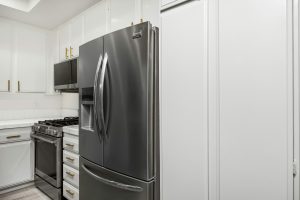

A Samsung refrigerator (RF, RS, RT, or RB series) runs almost entirely unattended for years, but a few minutes of maintenance every month or two is what separates a fridge that lasts a decade from one that starts throwing fan and compressor codes early.
Monthly
- Vacuum the condenser coil — accessible from the bottom-front grille on most current models. A dust- and pet-hair-coated coil is the single most common cause of poor cooling and the 23E condenser fan failure, since the compressor has to work harder to shed heat.
- Wipe down door gaskets on both the fridge and freezer doors and check for tears, warping, or food residue that prevents a full seal.
- Check the interior vents in both compartments to make sure food isn’t packed directly against them, which restricts the airflow that keeps temperatures even between the fridge and freezer.
Every Few Months
- Clean the water filter housing if your model has a filtered water/ice dispenser, and replace the filter cartridge on the schedule Samsung recommends (typically every six months) to maintain flow and ice quality.
- Check the drain pan and defrost drain at the back of the freezer compartment for buildup, since a clogged drain leads to water pooling inside the fridge.
- Inspect the ice maker for frost buildup around the housing, which can indicate a door seal issue letting in warm, humid air.
Ongoing Habits
Give hot leftovers a few minutes to cool before placing them in the fridge — repeatedly loading hot food forces the compressor and fans to work overtime and raises internal humidity, which contributes to frost buildup. Don’t overpack either compartment; airflow around stored food is what keeps temperatures consistent throughout, and Family Hub and SmartThings-connected models can actually flag temperature swings caused by overpacking if you check the app periodically. Replace water filters on schedule even if flow still seems fine — an old filter restricts flow gradually rather than failing outright.
Signs Something Needs Attention
A fridge that feels warmer than it used to, ice that tastes off, unusual fan noise from the back of the unit, or condensation forming on the exterior cabinet are all worth investigating before they become a full failure. Most of these trace back to the same root causes: a dirty condenser coil, a compromised door seal, or a clogged defrost drain — all things a homeowner can check first.
Seasonal Considerations
Refrigerators tend to work harder in summer months, both because kitchens run warmer and because the compressor and condenser fan have less thermal margin to work with — this is a good time to double-check coil cleanliness even if you’re on a regular schedule. In winter, if the unit sits in a garage or unheated space, be aware that very cold ambient temperatures can affect how the compressor cycles; check your specific model’s rated operating range if it’s installed somewhere outside normal kitchen conditions.
Why Routine Care Pays Off
Because the fridge, freezer, and ice maker share one refrigeration and control system, a small airflow or sealing issue in one area often shows up as an error code somewhere else on the shared board. Staying ahead of coil cleaning and gasket checks is the most effective way to avoid the fan and sensor failures that make up most refrigerator service calls. If you’re seeing early warning signs, our refrigerator repair service can inspect the sealed system and controls, and our refrigerator error code guide is a useful reference if a code appears.
We are an independent appliance repair service and are not affiliated with Samsung.