
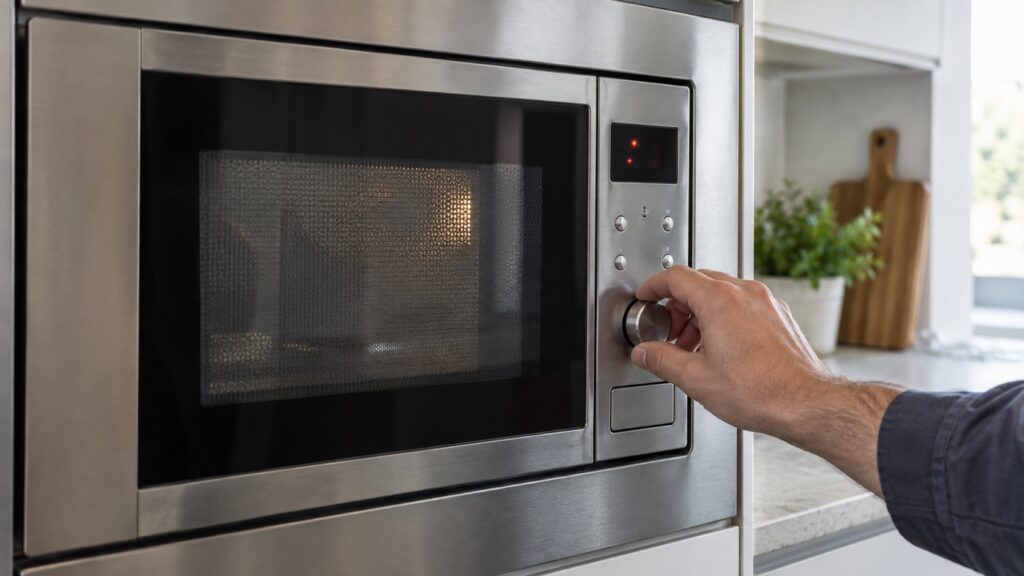
A Samsung microwave’s E-codes report a specific sensor or control fault, and each one points at a different part of the appliance — reading the wrong one as a general “microwave broke” message is how a five-minute fix turns into a wasted evening. The four codes below, including the Samsung microwave error code E24 that generates one of the most common search queries for this appliance, each have a distinct meaning confirmed against this site’s own error-code pages, not a generic assumption about what the letter-and-number combination usually means.
What does Samsung microwave error code E24 mean?
On a Samsung microwave, E-24 means a temperature condition inside the unit needs diagnosis — the control board has detected that the microwave’s internal temperature is not matching what it expects for the current stage of a cycle. This is broader than a single failed part: it can point at the temperature sensor itself, at the wiring between the sensor and the control board, or at the board’s own interpretation of a marginal reading, and separating those three requires testing rather than guessing from the code alone. E-24 is one of the more frequently searched Samsung microwave codes, and the volume of that search reflects how often the fault shows up rather than how simple it is to fix.
How is E-13 different from E-24, since both mention temperature?
E-13 is specifically a temperature sensor or thermistor failure — the physical sensor or its circuit has failed outright, which is a narrower and more direct fault than E-24’s broader “condition needs diagnosis” language. In practice, E-13 more often resolves to a single failed part once tested, while E-24 can resolve to several different causes depending on what the technician finds when checking the sensor circuit and the board’s response to it. If your display cycles between the two codes, or shows one and then the other after a power cycle, that pattern itself is useful information for whoever diagnoses it — mention both codes and the order they appeared rather than just the most recent one.
What does the E-11 humidity sensor code actually affect?
E-11 concerns the humidity sensor circuit, which some Samsung microwave models use to judge food moisture and automatically adjust cook time for functions like sensor reheat or sensor cook — it is not part of the basic timer-and-power heating path that a manual cook cycle uses. A microwave showing E-11 may still heat food normally on manual settings while losing the sensor-assisted auto-cook features, which is a useful way to confirm the fault is isolated to that sensor rather than affecting the whole unit. If manual cooking also fails alongside an E-11 code, the problem is likely broader than the humidity sensor circuit alone.
What does E-83 mean, and why is it different from a sensor code?
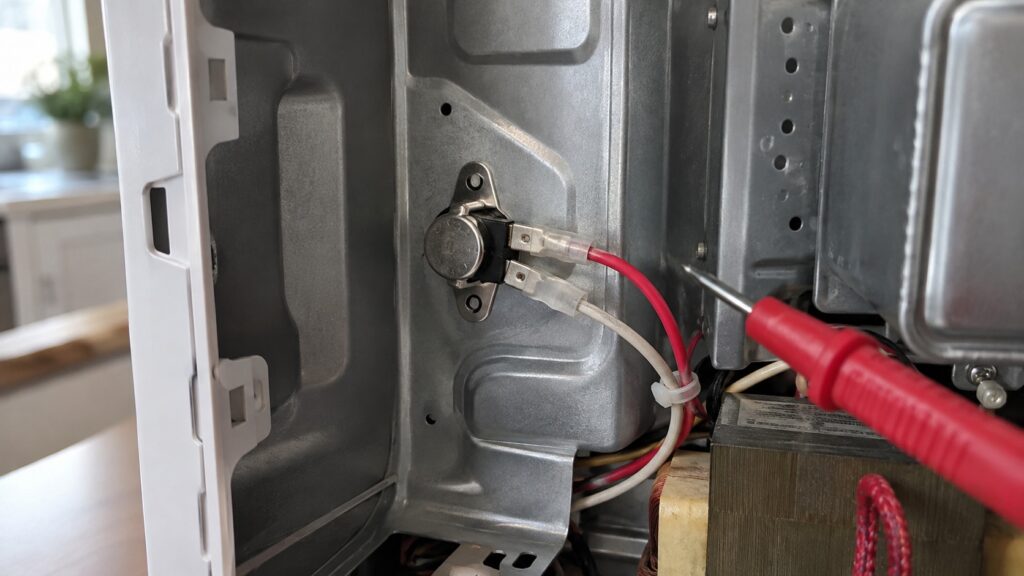
E-83 is described as a control communication condition on compatible models — this is a board-to-board communication fault rather than a failed sensor, closer in nature to the C-F0 and C-F2 communication codes seen on Samsung ranges and ovens than it is to E-11 or E-13. A microwave showing E-83 is reporting that its internal boards are not exchanging signals correctly, which can sometimes clear with a full power cycle (unplugging the unit for a full minute, not just pressing Cancel) if the fault was a momentary communication glitch rather than a hardware failure. If E-83 returns immediately after a power cycle, the communication fault is persistent and points at a board or connector issue rather than a one-time glitch.
What is safe to check yourself before calling for repair?
For any of these four codes, start with a full power cycle: unplug the microwave, wait a full minute, and plug it back in, since several E-codes on Samsung microwaves are latched conditions that clear on a fresh boot if the underlying fault was transient. Note exactly which code appeared, whether it repeated after the power cycle, and whether basic manual heating still worked during the fault — all three details cut diagnostic time significantly for whoever looks at the unit next. Do not open the microwave’s outer housing or attempt to access the magnetron or high-voltage capacitor yourself; these parts hold a dangerous charge even when the unit is unplugged, and they sit well beyond what any of these four E-codes require you to touch.
It also helps to separate a display fault from a heating fault. If the microwave shows an E-code but the display otherwise responds normally to button presses, the control electronics are largely intact and the fault is likely isolated to the sensor or communication path the code names. If the display is unresponsive, flickering, or the code appears alongside a burning smell or an unusual noise, treat that as more serious than any of the four codes on their own and unplug the unit rather than continuing to test it.
When does an E-code mean it is time to schedule service?
An E-code that returns immediately after a full power cycle, or one that appears alongside a visible symptom like uneven heating, a display that will not clear, or a door that will not seal, has moved past the point of a self-service fix. For a broader look at other Samsung microwave faults beyond these four codes, see our microwave troubleshooting guide, and if the unit is an over-the-range model, our over-the-range installation guide covers ventilation issues that can sometimes contribute to temperature-related codes like E-24.
We are an independent Samsung repair service, and our technicians can test the sensor circuits and control-board communication behind E-11, E-13, E-24 and E-83 without guessing from the code alone. Schedule Samsung microwave repair or book a visit with the exact code noted, and we will confirm the diagnosis before any part is ordered.