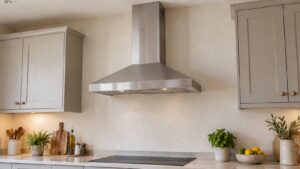
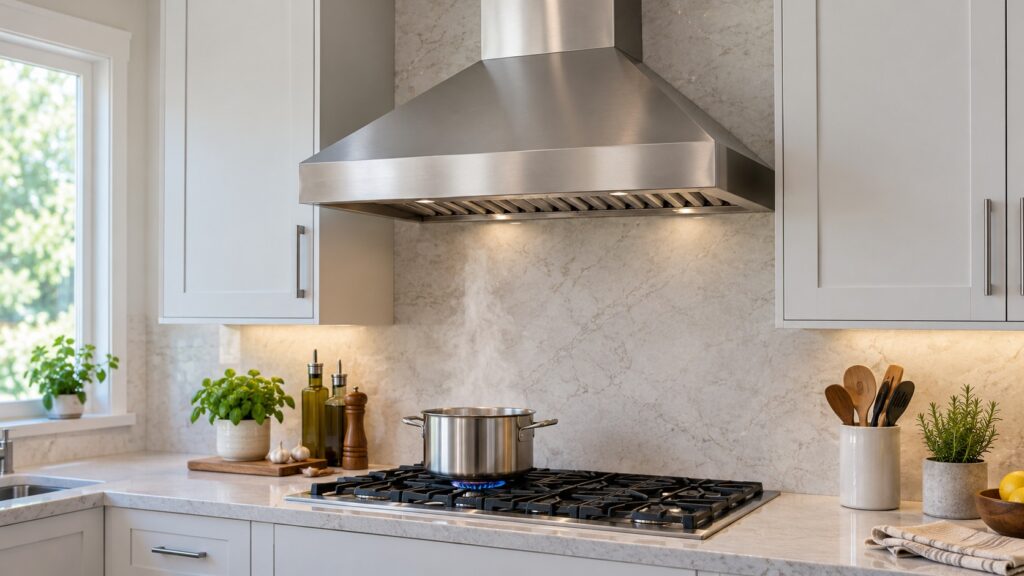
To choose among Samsung range hood models, read the model number first: NK30 and NK36 appear to point to 30-inch and 36-inch hoods, while the rest of the number separates the models in each family. Confirm the width on the rating label. Then match the width to your cooking surface, the airflow to how hard you cook, the duct run to what your kitchen allows, and check that the model can pair with your Samsung cooktop if you want automatic control.
Samsung range hoods look similar on a showroom floor, and the model numbers can feel like noise. They are not. The NK30 and NK36 families on this site cover nine models, from the NK30B3500US up to the NK36N7000WS, and the number is your starting point for the width and the exact model. This guide explains how to read those numbers, what to compare when you choose among Samsung range hood models and what to confirm before you order. Features change from year to year, so use the table as a map and verify the final details on the spec sheet for the exact model.
What does a Samsung range hood model number tell me?
Read it left to right. NK marks the family. The next two digits, 30 or 36 on our list, appear to give the width in inches, and that matches the way these hoods are sold for 30-inch and 36-inch cooking surfaces. After that come a letter and a four-digit group, 3500, 5000 or 7000 on our list, then a final pair of letters. Our model pages do not decode those parts, and we do not want to guess: a different group or ending can mean a different feature set or finish, so check the rating label, the spec sheet and your owner’s manual for what your exact model includes.
You can look up any of these on the site’s own pages, for example the NK36N7000WS and the NK30B3500US.
How wide should the hood be compared with my cooktop?
Choose a hood at least as wide as the cooking surface, and wider if you can. A 30-inch range pairs with an NK30 hood, and a 36-inch range or cooktop pairs with an NK36 hood. A hood that is narrower than the cooktop lets steam and grease escape around its sides. If you do a lot of frying or use gas burners, the capture area matters even more, because rising air spreads beyond the edges of a narrow hood.
Also look at mounting height. Manufacturers state a range for the distance between the cooking surface and the bottom of the hood, and the right height is a balance: too low is a heat and safety problem, too high and the hood stops capturing smoke. Take the figures from the installation sheet of the model you choose and compare them with your ceiling and cabinet layout.
How much airflow do I need?
Airflow is measured in cubic feet per minute, or CFM, and the right number depends on what you cook. A common rule of thumb for gas cooking is about 100 CFM for each 10,000 BTU of total burner output, while electric and induction cooktops can use less. Heavy searing, wok cooking and open-plan kitchens call for more; light cooking in a small kitchen needs less. A bigger fan is not always better: it can be louder, and a powerful hood in a tight home may need makeup air to avoid pulling exhaust from other appliances.
Check the noise rating as well, usually given in sones, and look at the fan speeds. A hood that has a quiet low speed that you will actually use does more for your kitchen than one with a high boost you never touch. If your hood runs but pulls weakly, the cause is often the duct or the filters rather than the fan; see fan runs but no suction for how that fault looks.
Ducted or recirculating, and what does that change?
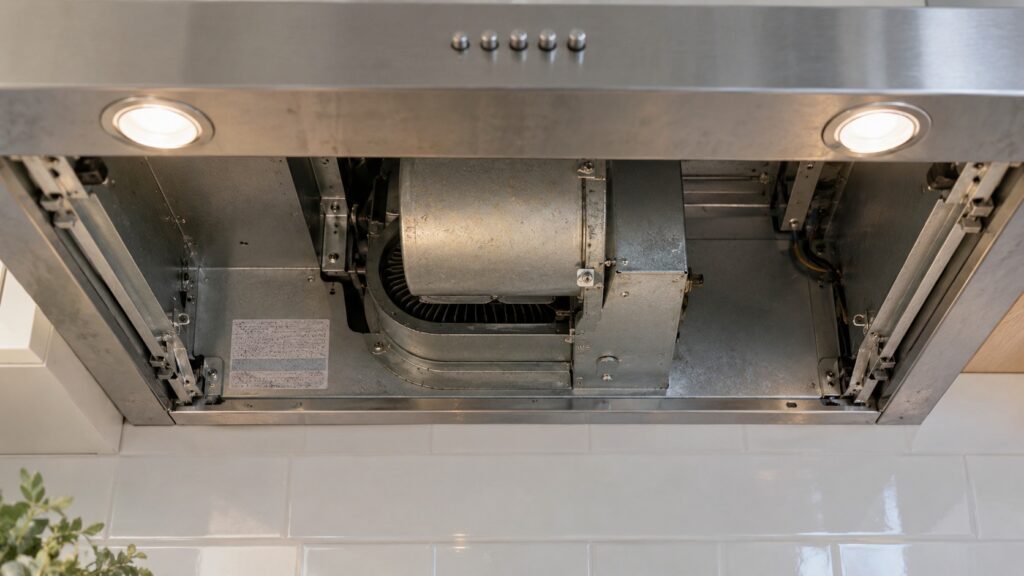
A ducted hood sends air outdoors and is the better choice for removing smoke, grease, heat and moisture. A recirculating setup filters the air and returns it to the kitchen, which is easier to install but cleans less. Whether a given model supports each option depends on the model, so confirm it on the spec sheet before you order. If you plan a ducted installation, check the duct size, the length of the run and the number of elbows, because a long run with many turns cuts airflow sharply. Our guide to Samsung range hood venting and pairing covers duct routing and the connection steps.
Think about maintenance too. Grease filters need washing, and charcoal filters, where used, need replacing. A hood with filters that are easy to remove and wash is one you will actually clean, which keeps its airflow close to what it was on the first day.
Should I pair the hood with a Samsung cooktop?
Some Samsung hoods can link to a compatible Samsung cooktop or range so that the fan and light respond to the cooking surface. If automatic control matters to you, confirm both the hood model and the cooktop model support it and check the pairing steps in the manual. If pairing later fails, the range hood won’t pair with cooktop page lists what to check. Pairing is a convenience and not a requirement: a hood works perfectly well with its own controls and a manual fan setting.
If you are replacing an existing hood and want to keep it running a few more years, compare costs first. Our Samsung range hood repair-or-replace guide sets out when a repair makes sense, and the range hood troubleshooting guide helps you check a problem first.
What should I check before ordering?
Write down four things: the width of your cooking surface, the available ceiling and cabinet height, the duct size and path, and the electrical supply at the hood location. Take the model number of the hood you plan to buy and compare its installation sheet against those four things. If you are unsure about the wiring, hire a qualified electrician. For service after purchase, see Samsung range hood repair or schedule a visit.