Samsung Twin Cooling describes a refrigerator with two separate cooling systems — one for the freezer and one for the fresh food compartment — rather than one system that makes cold in the freezer and shares it upward. Understanding samsung twin cooling changes how you use the appliance, because the thing it fixes is a problem most people did not know they had: smell and moisture traveling between the two halves.
The problem it solves
In a conventional refrigerator, one evaporator in the freezer makes all the cold, and a fan and a damper send some of it up into the fresh food compartment. That works, and it has two side effects.
The first is that air moves between the compartments, carrying smells with it. A strongly flavored item in the freezer eventually makes itself known in the fridge, and the other direction happens too. The second is humidity: freezer air is very dry, and a fresh food compartment fed with it dries out produce faster than it needs to.
Two independent systems eliminate the shared path entirely. The fridge side can be held damper, the freezer side stays dry, and neither knows what the other is storing.
Using the humidity you now have
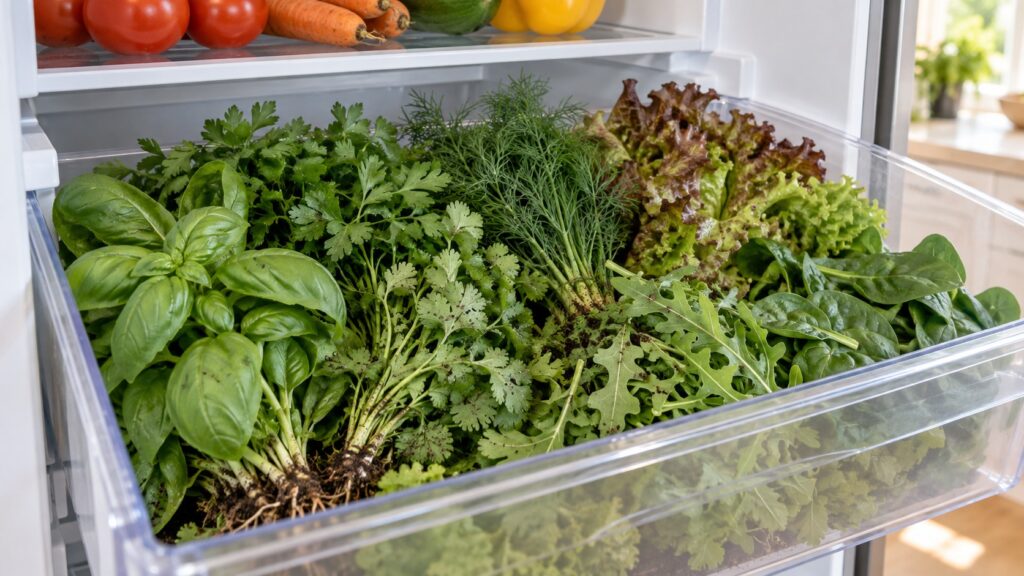
A fresh food compartment that is not being dried by freezer air keeps produce noticeably better — but only if you let it. Three habits matter more here than on a conventional refrigerator.
- Do not wash produce before storing it. Surface water plus higher humidity is how salad turns to slime.
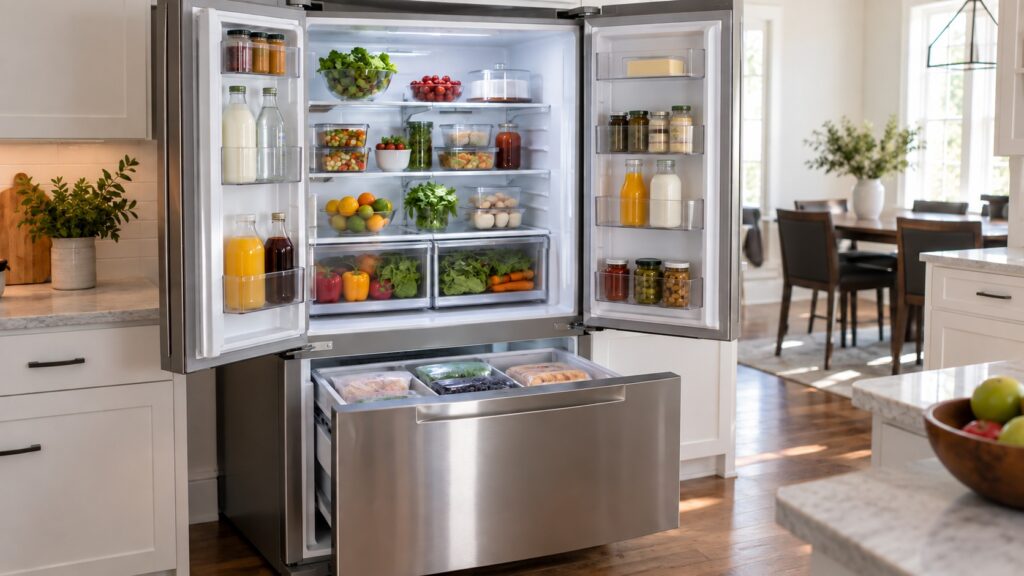
- Use the crisper drawers as intended. High humidity for things that wilt, low for things that rot, and never apples in with the greens.
- Cover leftovers anyway. Higher humidity helps produce and does nothing for an open bowl of something aromatic.
The practical result people notice first is herbs and salad lasting a week rather than three days. That is the feature doing its job.
Two systems means two sets of symptoms
This is the genuinely useful diagnostic consequence. On a conventional refrigerator, a warm fresh food side with a cold freezer nearly always means airflow between them — a fan, a damper or a frosted evaporator. On a twin system there is no airflow between them, so the same symptom points at that compartment’s own evaporator, fan or control.
It also means one half can fail while the other is perfect, and for longer. A freezer that is fine can mask a fridge side that has been slowly drifting, because nothing about the freezer tells you anything about the other compartment any more.
So measure both. A thermometer in a glass of water on a middle shelf and another between packages in the freezer, read after several hours, is the check that tells you what is actually happening. Our refrigerator troubleshooting guide covers what each pattern means.
What has not changed
Everything outside the cabinet works the same way, and it is still where most faults live.
The condenser still has to be clean, because neither cooling system can reject heat through a blanket of dust. Door seals still have to seal — test with a banknote around the whole edge. Vents inside each compartment still have to be clear, because each system still distributes its cold by moving air. And the appliance still needs its clearance at the back and sides.
Our refrigerator maintenance guide covers the routine, and it applies here exactly as it does to any other design.
What the feature cannot do
It is worth being clear about the limits, because people occasionally expect more than the design promises.
It does not make the refrigerator immune to smells. A cut onion in an open dish still scents the compartment it sits in; what has stopped is the traffic between compartments. It does not compensate for a failing gasket, dirty coils or a blocked vent, and on a poorly maintained appliance two systems simply means two systems working too hard.
And it does not extend the life of food that was already old when it went in. Cold storage slows decline; it does not reverse it. A steadier, damper compartment buys days on produce and changes nothing about a package that has been open for a fortnight.
Convertible compartments
Because the freezer side has its own system, some models allow it to be run at refrigerator temperatures instead — useful before a gathering, or for a household that freezes very little.
Two cautions. Check whether your specific model offers it rather than assuming, and give the compartment time to change state before loading it; switching a full freezer to fridge temperatures does not happen in an hour. And remember what is in there before you switch, which sounds obvious and is the way most people learn this lesson.
Efficiency and noise
Two systems can be run independently, which means the appliance does not have to cool a whole freezer to keep milk cold. In practice that shows up as steadier temperatures rather than dramatic energy savings, and steadiness is worth more for food than a number on a label.
On noise, expect a quiet background of airflow and occasional compressor activity. What is worth investigating is change rather than level: a rising whine, rhythmic clicking, or a compressor that starts every few minutes. Our care tips guide covers the habits that keep it that way.
When to call
Call when one compartment holds temperature and the other does not — on this design that points firmly at the failing side’s own components. Call when either side will not hold temperature with clean coils and sealing doors, when frost builds on a rear wall, or when the compressor runs without stopping.
We are an independent repair company and not a factory service arm. Pricing starts from a diagnostic visit and we confirm the estimate before any work begins. Samsung refrigerator repair covers evaporators, fans, sensors, defrost and controls, and you can schedule a visit online.