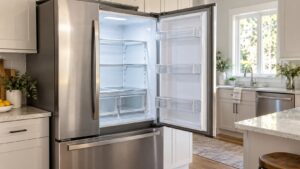
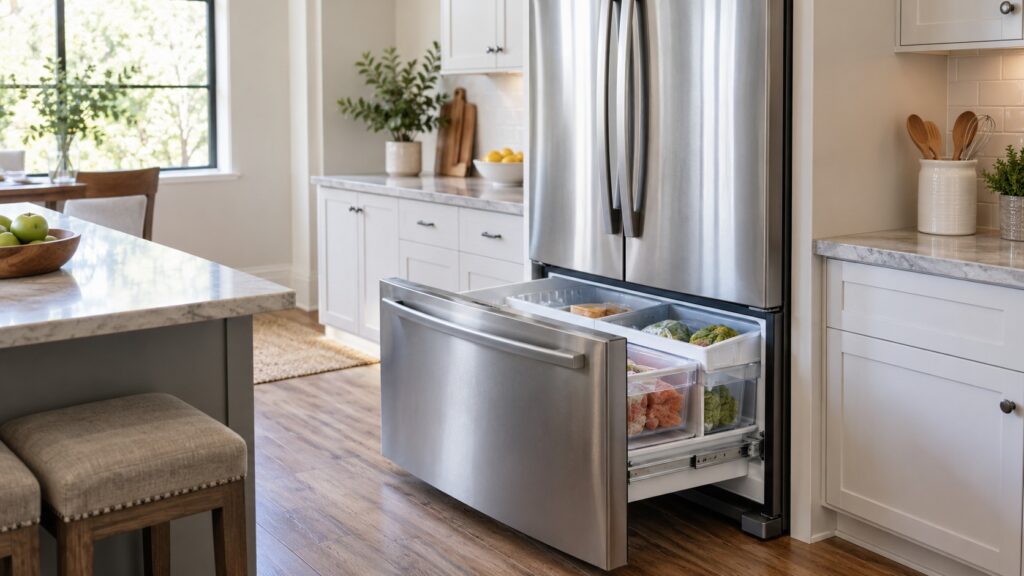
A Samsung FlexZone drawer is a refrigerator drawer you can set to suit what you store in it, instead of leaving it fixed at the temperature of the main compartment. FlexZone is a Samsung feature name. This site’s refrigerator model pages do not describe it or spell out any modes, so the details of each setting on your model, including what the choices are called and how you change them, belong to your owner’s manual. This guide explains the idea in general terms, shows how to get good results from a flexible drawer, and tells you what to check when it seems to be too warm or too cold.
What is a Samsung FlexZone drawer?
Most refrigerators keep everything in one compartment at one temperature, with a separate crisper or deli drawer that is only slightly different. A flexible drawer is a compartment with its own controls. You choose a setting that matches what you are keeping in it. The point is convenience: one drawer can hold produce, drinks, party platters or overflow meat, depending on the week. Samsung uses the name FlexZone for this kind of drawer on some of its refrigerators. The settings it offers, such as which temperatures or labeled modes are available, differ from model to model, so the manual for your model is the only reliable list. We do not publish one because the site’s model pages do not carry it.
It is worth separating this feature from Twin Cooling. Twin Cooling gives the refrigerator and freezer separate cooling systems, and our Samsung Twin Cooling tips explain it. A flexible drawer is a different feature, even if both appear on the same refrigerator.
How should you use a FlexZone drawer?
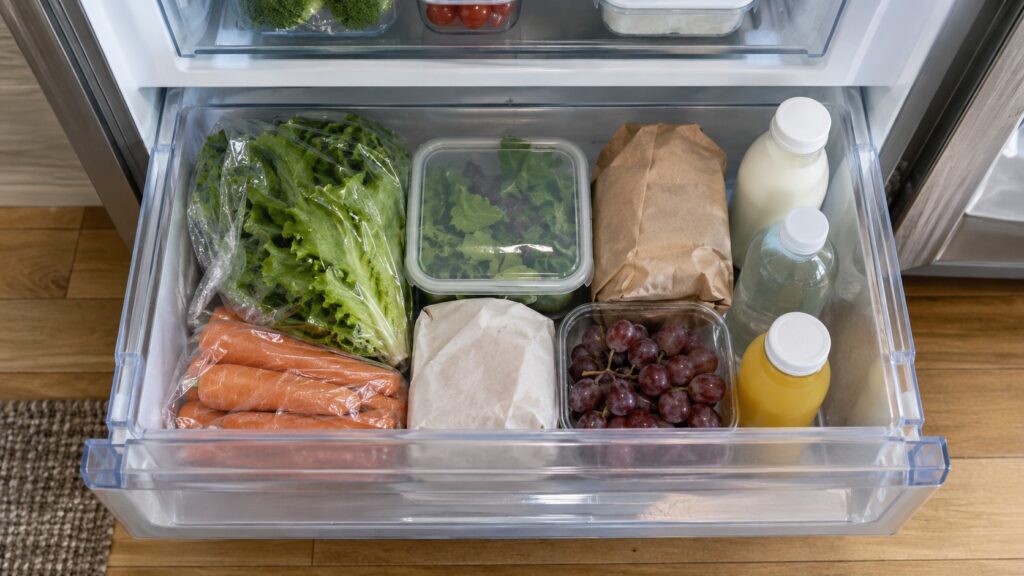
Use it the way the manual describes, and keep a few common-sense habits. Choose the setting before you load the drawer, then check that the food you put in matches it. Keep the most perishable items, such as raw meat and dairy, at a cold setting and in sealed containers. Do not use a warmer setting for items that spoil quickly. Store raw meat low and sealed so it cannot drip onto other food. Do not overfill the drawer; it should close fully and air should be able to circulate around the contents. If you set it aside for drinks or party food, change it back when the event is over so the drawer is not left on a setting that does not suit what is in it.
Set the setting once and give the drawer time to settle before you judge it. A refrigerator needs time to bring a changed compartment to its new temperature, and testing it after a few minutes tells you nothing. If you are unsure how long your model needs, the manual says, and a thermometer reading taken the next day is more useful than one taken straight away.
How do you know the drawer is cold enough?
Do not guess. A small refrigerator thermometer placed in the drawer tells you what the drawer is doing. For food safety, the FDA’s guidance is to keep the refrigerator at 40 degrees F or below, and that applies to anything perishable you keep in a flexible drawer. If the drawer is warmer than the setting suggests, check the basics: Is the drawer closing fully? Is anything blocking the vents at the back? Has the door been open for long, or the drawer packed so tightly that air cannot move? Is the refrigerator itself cold? Our Samsung refrigerator troubleshooting guide helps if the whole cabinet is warm.
What if the drawer is too cold, or food freezes?
Food that freezes in a drawer usually means the setting is colder than the food needs, the food is touching the back of the drawer or a vent, or the main refrigerator is set colder than it should be. Move the food away from the cold surfaces, check the setting against the manual and let the drawer recover. If the problem continues with the setting correct, the temperature control or an air passage may be at fault, and that is a technician’s job. Frost or water in the drawer can also come from a door seal that is not closing or from a drain problem, as our guide to maintaining a Samsung refrigerator explains.
How do you keep the drawer clean?
Empty it when you do a refrigerator clean-out, release it as the manual shows and wash it with mild soap and warm water. Dry it and refit it so that it runs smoothly and seals. Do not force a drawer that sticks, and do not remove panels or wiring behind it. Spills in a flexible drawer can leak down into the cabinet, so wipe them as they happen. If the drawer will not close, will not stay in its track or shows a code, stop using the setting and book a visit. See our refrigerator repair page for how a visit works. If you see water near an outlet, switch off the breaker at the panel while standing on a dry floor.