
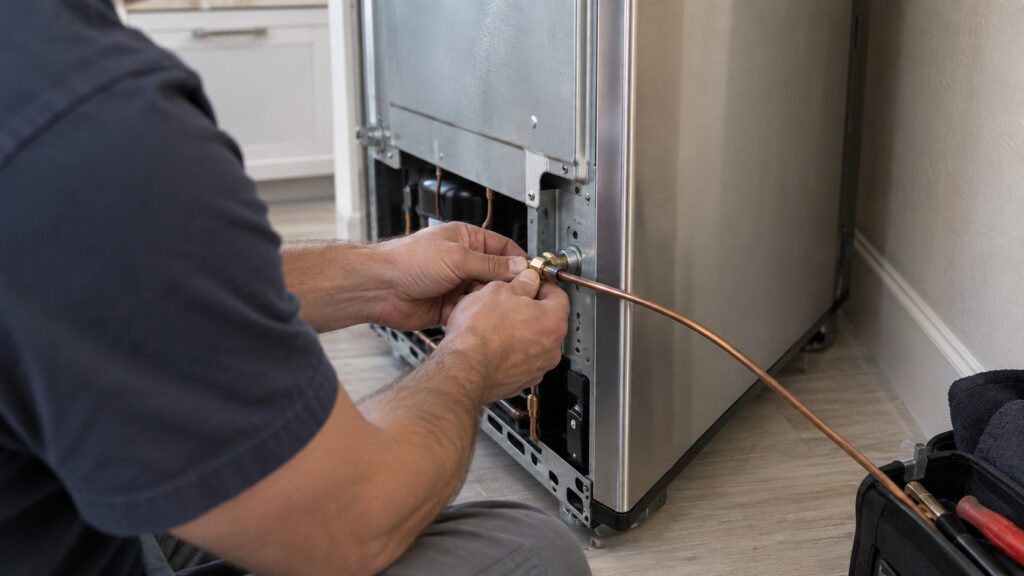
Installing the water line for a Samsung refrigerator’s icemaker and dispenser means running a dedicated 1/4-inch supply line from a nearby cold-water source to the fitting on the back of the unit, with a shutoff valve in between that you can reach without pulling the refrigerator out again. Getting this line right the first time is what determines whether the icemaker fills correctly, the dispenser runs clear water instead of a sputtering trickle, and the connection stays leak-free behind an appliance that is awkward to move. This Samsung refrigerator water line installation guide covers the parts you need, the routing that avoids leaks, and the checks that fix a slow icemaker after the line is already connected.
What do you need before you connect the water line?
Before touching the fitting on the refrigerator, confirm you have a cold-water source within reach of a 1/4-inch line — most kitchens use the cold line under the sink or a nearby laundry connection. You will need a saddle valve or, better, a dedicated in-line shutoff valve rated for refrigerator use, plus enough 1/4-inch copper or PEX tubing to reach the refrigerator’s rear fitting with slack to spare. Turn off the water supply at the source before cutting into any line, and have a small bucket ready for the water that drains out of the section you are working on.
How do you route the line without damaging it?
Route the tubing along a wall or floor path that keeps it away from foot traffic and away from anywhere the refrigerator’s own weight could pinch it when the unit is pushed back into place. Leave a service loop — extra slack coiled loosely behind the unit — so the refrigerator can be pulled forward for cleaning the condenser coils or troubleshooting without disconnecting the water line each time. A line pulled taut against the wall is the single most common cause of a split fitting months later, because every time the refrigerator moves even slightly, the tension transfers straight to the connection point.
Why does the icemaker underfill even after the line is connected?
Underfilled ice cubes or a slow dispenser after installation almost always trace back to one of three things: water pressure below what the fill valve needs to open fully, a water filter that was not seated correctly, or trapped air in a newly run line. Check pressure first — a Samsung refrigerator’s inlet valve needs a minimum supply pressure to open reliably, and an older saddle valve or a kinked line can quietly starve that pressure even though water technically reaches the unit. Reseat the filter by removing and reinstalling it fully until it clicks, and run water through the dispenser for several minutes to purge air before judging ice production.
How do you find a leak at the connection point?
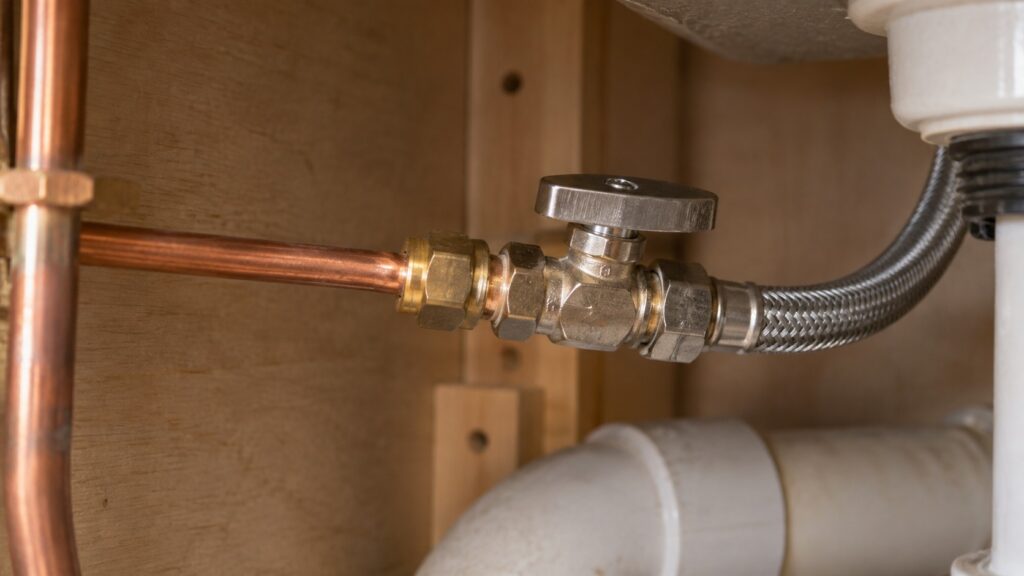
A slow leak at the water line connection often shows up as a damp patch on the floor behind the refrigerator or a faint mineral trail along the tubing, well before it becomes an obvious drip. Pull the refrigerator forward carefully, using the service loop you left during installation, and check the compression fitting at both ends of the line — at the shutoff valve and at the refrigerator’s inlet — since these are the two points most likely to weep over time as the tubing settles. A fitting that was hand-tightened without a wrench is a common source of a slow leak that takes weeks to become visible. Checking both ends every few months, even when nothing looks wrong, catches this kind of leak before it damages flooring or cabinetry.
Does the water filter affect the installation, not just the taste?
Yes — the filter sits directly in the flow path between the supply line and both the icemaker and the dispenser, so an unseated or clogged filter changes fill speed and dispenser flow independently of anything wrong with the water line itself. During installation, run the initial flush through the dispenser with the filter correctly seated rather than bypassed, because a fresh filter that was never flushed can trap air and carbon fines that show up as sputtering water for the first several uses. If flow stays weak after a proper flush, the filter itself — not the water line — is usually the next thing to check. Our refrigerator maintenance guide covers filter replacement intervals in more detail.
When should you call for help instead of finishing the install yourself?
Most water line installations are within reach of a careful DIY job, but stop and get help if the shutoff at your water source is a type you are not confident cutting into, if you find any existing corrosion on the pipe you are tapping, or if the refrigerator’s own inlet valve assembly needs to be accessed to resolve an underfill issue — that valve sits behind a rear panel close to electrical connections and is not designed for casual access. For the full checklist of what to confirm before any Samsung refrigerator installation, see our refrigerator installation checks guide, and if ice production still lags after the line and filter are both correct, our ice maker troubleshooting guide covers the fill-valve side of the problem.
We are an independent Samsung repair service, not a factory service arm, and our technicians handle both the plumbing and the appliance side of a water line problem. If you would rather not run the line yourself, or an existing connection is leaking, schedule Samsung refrigerator repair and we will confirm the fix and the price before starting any work.