
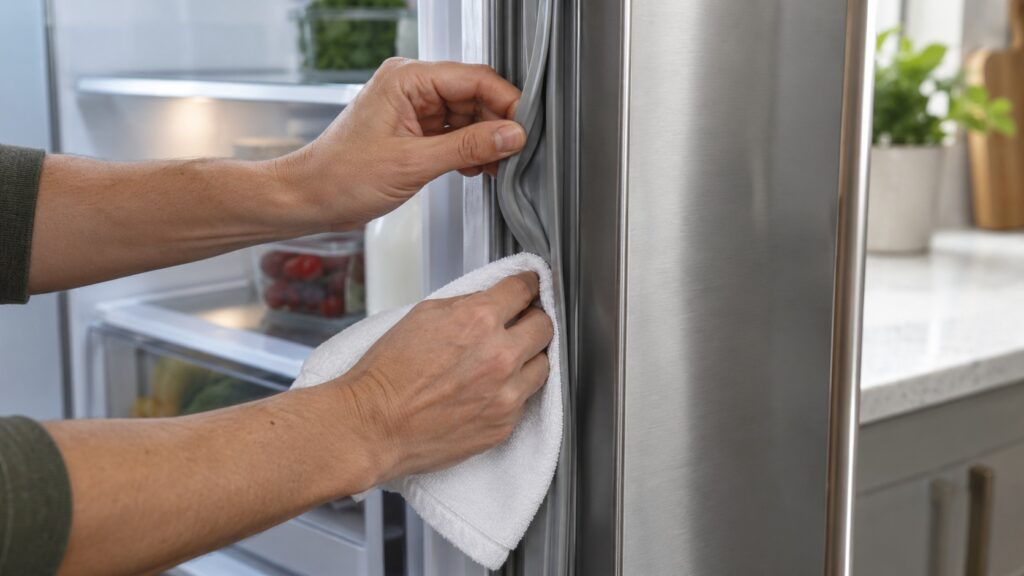
A Samsung refrigerator door gasket is the soft seal that keeps cold air in. Wipe it every month with warm soapy water, test the seal with a strip of paper at several points, and look for tears, hard spots and gaps. A worn gasket makes the compressor run longer, grows frost near the door and can set off door-open alarms, and it is one of the cheapest fixes on the whole refrigerator.
Most people never look at the rubber strip around the refrigerator door until something goes wrong: frost around the freezer opening, drips on the front of the cabinet, or a motor that never seems to stop. By then the gasket has often been leaking for months. This guide shows how to care for a Samsung refrigerator door gasket, how to test it in two minutes, how to fix a gasket that is dirty or bent out of shape and how to know when it needs to be replaced. It applies to the refrigerator doors and to freezer doors and drawers, and the steps are simple enough to do on a Saturday morning.
What does the door gasket do, and why does it matter?
The gasket is a flexible seal, often with a small magnet inside, that presses against the cabinet when the door closes. It stops warm, humid room air from leaking into the cold compartments. When it works, the compressor runs in short cycles and the air inside stays dry. When it does not, warm moist air creeps in, condenses on cold surfaces and turns into frost, and the compressor works much longer to keep up.
The effects add up. Higher running time means more wear and a higher electric bill. Frost build-up around the opening is a classic sign, and it often leads to ice that blocks the door from closing fully, which makes the leak worse. Condensation on the outside edge, a door that swings open on its own or an alarm that says the door is open when it is not can all trace back to the same strip of rubber.
How do I clean a Samsung refrigerator door gasket?
Use a soft cloth, warm water and a drop of mild dish soap. Open the door fully, pull the gasket folds gently open with one hand and wipe inside the channel with the other, because that is where spills, crumbs and sticky residue hide. A soft toothbrush helps in the corners. Rinse with a clean damp cloth and dry the gasket with a towel. Do not use bleach, abrasive pads or solvents, which dry the rubber and make it brittle.
A dirty gasket does not seal, and a sticky gasket can tear when you open the door. If you notice the door sticking after it has been closed for a while, a thin layer of residue is likely the cause. Clean it before you make any other judgment about the seal. While you are there, check the door bins and shelves, since overloaded bins can push the door slightly open.
How do I test whether the gasket still seals?
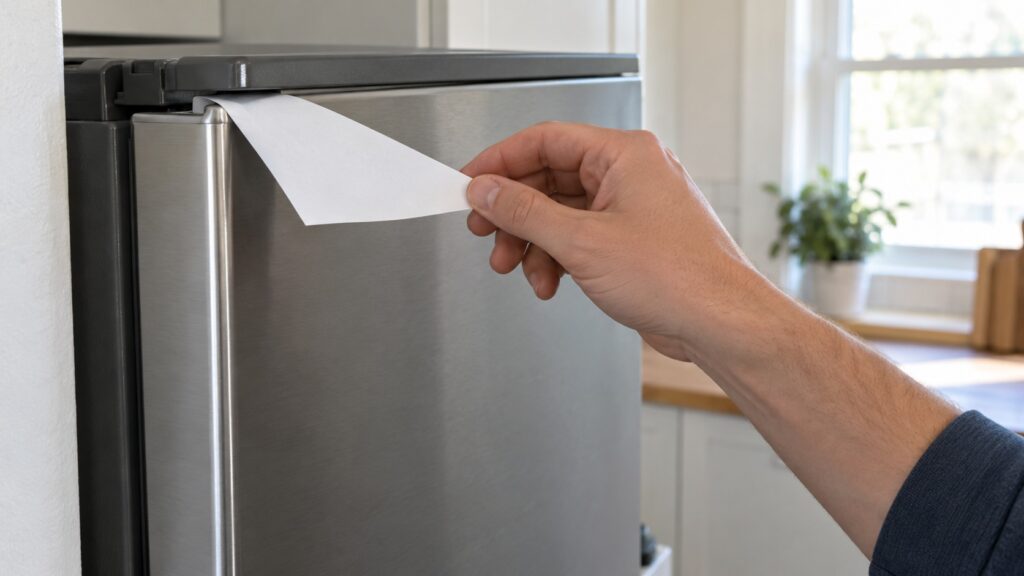
Use the paper test. Close the door on a strip of ordinary paper, about the width of a dollar bill, so that half of it sticks out. Try to pull it out. You should feel a steady resistance or a slight drag. If the paper slides out easily, that spot is not sealing. Repeat the test at several points: top left, top right, middle, bottom left and bottom right of the door, and on the hinge side.
Mark any weak spots with a piece of tape so that you can come back to them. A weak spot at one corner often means a door that is hanging crooked or a refrigerator that is not level, and not a bad gasket. Check that the refrigerator sits level and that the doors line up; a slightly tilted cabinet can pull a door away from the seal. If one door leaks and the other does not, the problem is local to that door.
Can I fix a gasket that is bent or has gaps?
Often, yes. A gasket that has been squashed by a stuck bin or by being closed on a bag can recover. Warm the stiff area gently with a hair dryer on low, from a few inches away, and press the gasket back into shape with your hand. Do this for a minute or two, then close the door and re-test. A gasket that has popped out of its groove can be pushed back in along its length with your fingers. Do not use a heat gun, which can melt or burn the rubber.
If a section is torn, split or hard, or if the gasket has shrunk away from the corner and leaves a permanent gap, cleaning will not cure it. The gasket then needs replacing, which is usually a simple job for a technician, since the new strip must be fitted correctly around the door. Check the model number on the label inside the cabinet before you order or book, and if you also see frost, read about the whole cooling picture in Samsung freezer defrost drain maintenance and Samsung refrigerator fan error codes.
What symptoms point to a bad gasket and not something else?
Frost or beads of water only around the door opening, a drip line on the door front, a compressor that runs a lot with no change in use and a door-open alarm that sounds even though you closed the door are all strong hints. Compare them with other causes: a general warm interior points to the fans, the damper or the sealed system rather than the seal, and our Samsung refrigerator troubleshooting guide helps you sort them. The habits in Samsung twin cooling tips also work best with tight door seals, because a leak lets humid room air into the compartments you are trying to keep dry.
For a full care routine, the Samsung refrigerator maintenance guide and the care tips list the other monthly and yearly jobs. If the gasket checks out and the symptoms remain, see Samsung refrigerator repair or schedule a visit.