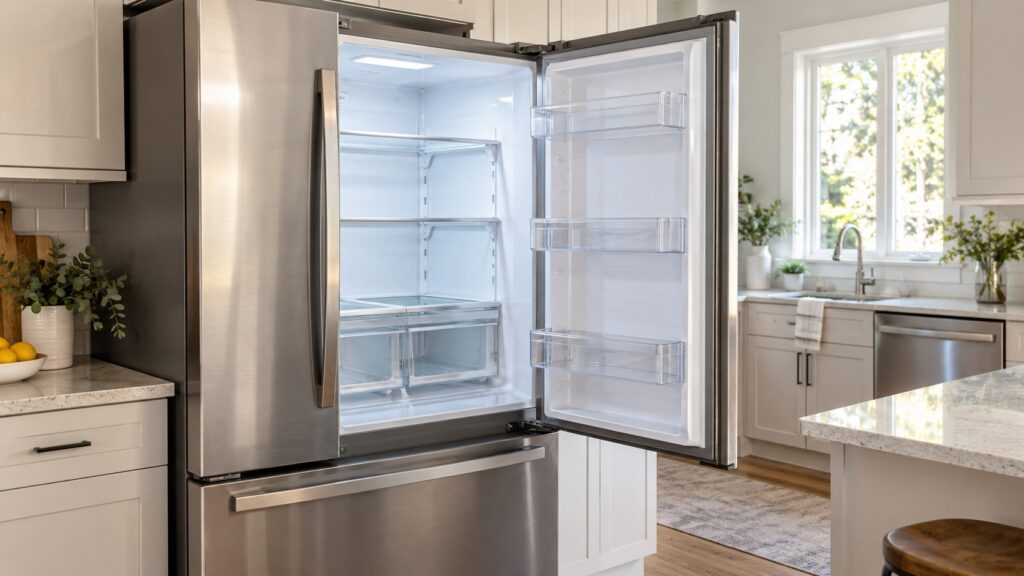
Samsung refrigerator glass shelf cleaning is done in three moves: empty the shelf, take it out the way your owner’s manual shows, and wash it with mild soap and warm water before it goes back. Glass shelves and drawers collect spills, condensation and the film that food packaging leaves behind, and cleaning them is one of the easiest ways to keep a refrigerator fresh. The exact way a shelf or drawer releases differs between models, so this guide gives the safe general method and leaves the release steps to the manual for your model.
How do you remove a glass shelf in a Samsung refrigerator?
Look at the owner’s manual first. Samsung refrigerators use shelves held on rails or brackets in the cabinet walls, and models differ in whether a shelf lifts out, tilts or slides before it frees. The manual shows the right movement for your model, and following it matters because a glass shelf that is forced can chip or crack. As a general rule, empty the shelf completely, support it with both hands and lift or slide it only as far as the manual allows. Do not remove more than the manual says you can, and never lever a shelf out with a tool.
If a shelf will not move after a gentle try, stop and check whether something is in the way, such as a drawer, a bin or a shelf above. Do not take apart the cabinet liner or any plastic trim to get at a stuck shelf. A shelf that will not come free is not worth a cracked liner.
What is the safe way to wash glass shelves and drawers?
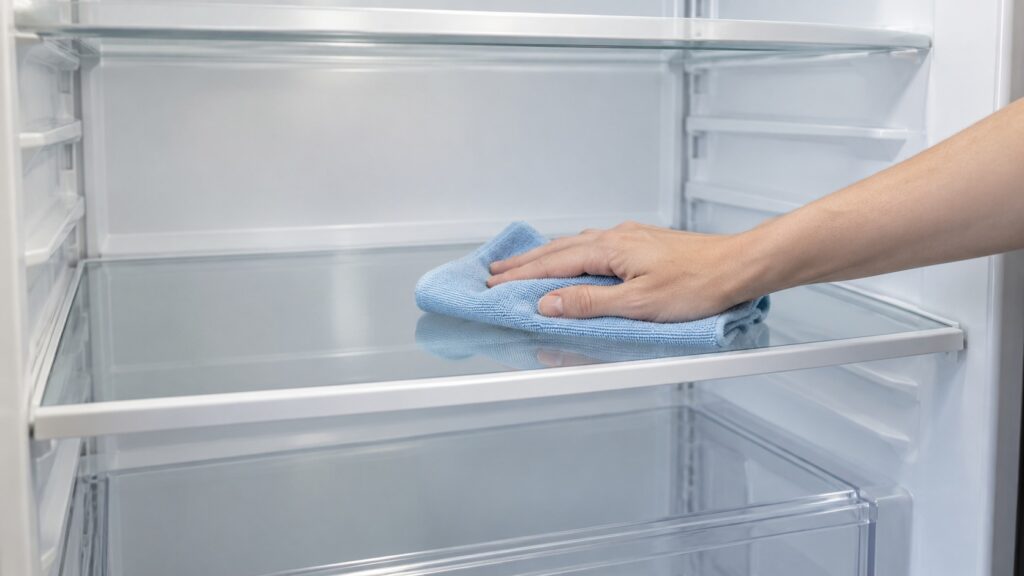
Wash them by hand in the sink with mild dish soap and warm water, using a soft cloth or sponge. Let a shelf that has been in the cold come up to room temperature before you wash it, and do not pour hot water over a cold glass shelf. A sudden temperature swing is the usual reason glass cracks, and tempered shelves are not immune to a hard knock on the edge either. Rinse with clean water and dry with a soft towel so that no soap film is left. A plain glass cleaner is not necessary, and harsh chemicals or abrasive pads can scratch the shelf or damage the trim around its edge.
Whether a shelf or drawer is safe in the dishwasher is a question for the manual. Do not assume it is, particularly for shelves with a trim frame or plastic edging, which can warp in heat.
How do you clean the drawers and the cabinet around them?
Drawers, such as the crisper bins, follow the same logic. Empty the drawer, pull it out to its stop and release it the way the manual shows, then wash it with soap and warm water, rinse and dry. While the shelves and drawers are out, the empty cabinet is easy to wipe. Use a soft cloth with a little mild soap solution, wring it out well, wipe the back wall and the side liners, and dry. Keep water away from the control area, the air vents and the light fittings. Check the area around the drain at the back of the compartment for debris or a film of water. Our guide to Samsung freezer defrost drain maintenance explains why a blocked drain is worth knowing about.
Take a moment to wipe the rubber door gasket as well, where food particles collect, and look for tears or a sticky film. A clean gasket seals better, and our guide to maintaining a Samsung refrigerator puts the whole routine in one place.
What goes wrong when shelves are put back wrongly?
A shelf that is not seated on its supports on both sides can tilt and slide when you load it. Before you put the food back, push gently on each shelf and each drawer to confirm that it sits firmly, and that a drawer closes all the way. A drawer that sits crooked can keep a door from closing fully, and a door that is slightly open lets warm air in. Samsung refrigerators with Twin Cooling have two separate cooling systems, and a bin out of place can interfere with air movement. If you changed shelf heights, keep nothing pressed against the back wall vents, because blocked vents are a common reason one part of the cabinet runs warmer than another. Our Samsung Twin Cooling tips explain how the two systems share the cabinet.
When does cleaning point to a real fault?
Cleaning often reveals a problem. Water pooling at the bottom of the cabinet suggests a blocked drain. Frost on the back wall of the freezer suggests a defrost or door-seal problem. A smell that stays after the interior is clean suggests food that is hidden somewhere or a drain issue. A crack in a glass shelf means it should be replaced, not taped. If the refrigerator is warm, noisy or showing a code, read our Samsung refrigerator troubleshooting guide. If you see water near an outlet, switch off the breaker at the panel while standing on a dry floor and do not pull the plug from a wet outlet. Do not remove cabinet panels yourself; that belongs to a technician, and our refrigerator repair page explains how a visit works.