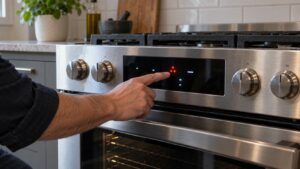
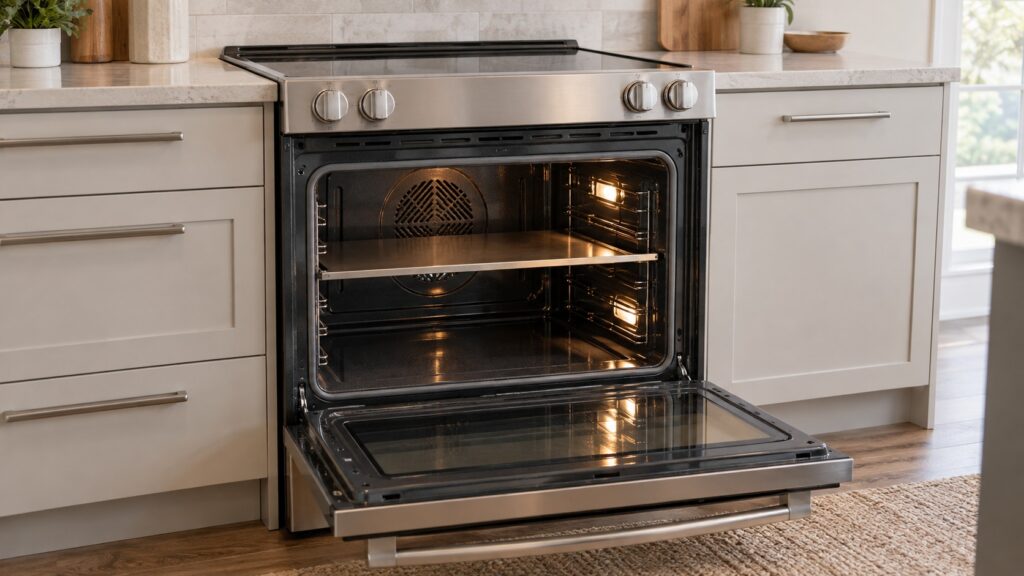
A Samsung Flex Duo range splits the single oven cavity into two independently heated zones with a slide-in divider, so you can run a smaller compartment at one temperature while the rest of the cavity runs at another — or open the divider and use the whole space as one large oven. A single-cavity range has one heating element set and one thermostat for the entire interior. Choosing between the two is really a question about how you cook, not which range is “better,” and the divider itself is the part most buyers never think to ask about until it fails.
What does Flex Duo actually change inside the oven?
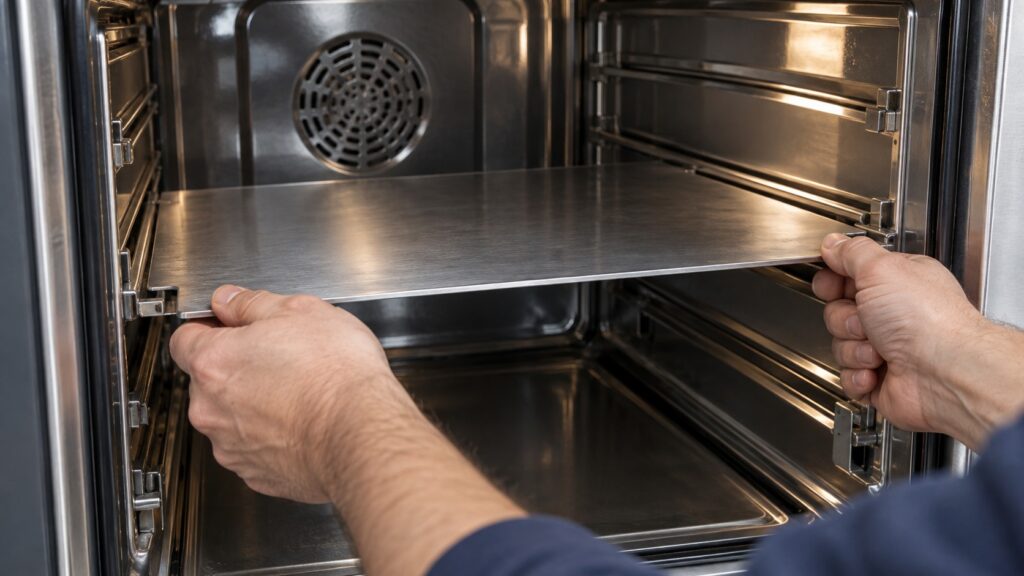
The divider is a flat panel that slides in from the front of the cavity on a pair of internal rails, roughly two-thirds of the way back. With it in place, the smaller upper zone and the larger lower zone each get their own heating cycle, so the range is effectively running two ovens that happen to share one door and one exterior. Pull the divider out and store it, and the cavity behaves like a normal single space, heated as one volume. Nothing about the racks, the door, or the broil element changes — the difference is entirely in how the control board schedules heat.
Is a Flex Duo range worth it for how you actually cook?
The honest answer depends on how often you cook two dishes at genuinely different temperatures. If most meals are a single tray or a single pan, a single-cavity Samsung range gives you the same cooking result with one fewer moving part and nothing extra to seal or clean. If you regularly bake something delicate while roasting something else, or you host meals where a side dish and a main need different heat at the same time, the two independent zones save real oven-juggling. Buyers who want Flex Duo purely because it sounds more capable, without a cooking pattern that uses the split, often end up running the oven as one cavity anyway and never touching the divider.
Does the divider affect heating evenness or energy use?
With the divider removed, a Flex Duo range heats the full cavity the same way a single-cavity model does — there is no permanent partition changing airflow when you are not using the split. With the divider installed, each zone is smaller than the full cavity, so each one can reach its target temperature with less energy and less preheat time than heating the whole oven for a single small dish. The trade-off is that the divider itself is a metal panel inside a hot cavity: it needs the same grease-cleaning attention as the racks, and its edge seals against the cavity walls, not against the door, so it is a different maintenance point than anything on a single-cavity range.
What goes wrong more often on a Flex Duo range?
Because Flex Duo adds a second zone, it also adds a second set of things that can be reported as a problem when only one zone is actually affected. A common service call is “the oven won’t heat” when only the smaller zone is out — the larger zone is working the whole time, and a look at the display or a manual check of each zone separately clears up the confusion quickly. The divider itself can also warp slightly after years of use, which changes how well the two zones stay separated; if you smell or taste crossover between what should be two isolated zones, that is usually the divider’s seal, not a sensor. For a comparison against a full list of common range fault codes, see our guide to Samsung C-codes across appliances, which explains why a code like C-20 or C-24 reads differently on a range than it does on an oven or a cooktop.
How do you decide between the two before you buy?
Start with your actual cooking week rather than the spec sheet. Count how many times in a typical month you needed two different oven temperatures at the same time — for most households it is occasional, for some it is every holiday and every Sunday. If it is occasional, the single-cavity range covers it with a slightly longer wait between dishes and a simpler unit to own for years. If it is frequent, the Flex Duo range removes that wait entirely and the extra part to clean becomes worth the trade. Either way, check the same basics you would on any range: element wattage, self-clean cycle length, and whether the model uses a glass-touch or knob control panel, since that affects how repairs are priced later.
Whichever range you choose, correct installation checks matter just as much as the cavity design — a range that is not level or not seated correctly on its anti-tip bracket can throw off oven performance on either type. Our Samsung range repair technicians work on both single-cavity and Flex Duo models and can walk you through what a specific model actually includes before you buy secondhand or open-box.
What should you ask before buying a used or open-box Flex Duo range?
Ask specifically whether the divider panel is present and undamaged — it is a separate part from the range itself and is sometimes missing from open-box returns or units that changed households. Ask whether both zones have been tested independently, since a seller checking “the oven heats” by running it as a single cavity will not reveal a fault in the smaller zone. And ask about the self-clean cycle history: a divider left in place through repeated self-clean cycles takes more thermal cycling than the cavity walls, which is exactly the kind of wear that shows up as a warped seal a year or two later.
If you already own a Flex Duo range and want to know whether a heating complaint is worth a service call or a simple fix, schedule a visit and describe which zone is affected — that single detail cuts diagnostic time in half on a two-zone cavity.