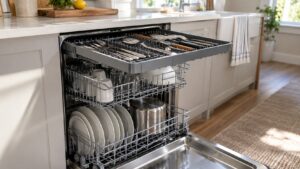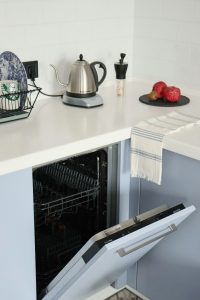
OC (also shown as oE) on a Samsung dishwasher is an excess-water problem, part of the same overflow-protection logic used elsewhere in Samsung’s lineup — the control board has detected water at a level higher than a normal cycle should reach and stops the fill or wash to avoid a real overflow.
What typically causes excess water
Dishwashers rely on a water-level sensor and a properly seated float switch at the base of the tub to know when enough water has entered for a cycle. An OC problem usually comes down to one of these:
- A float switch that’s stuck or physically obstructed by a dropped utensil, food debris, or a shifted lower rack
- A water inlet valve that’s stuck open and continuing to let water in past the point it should stop
- Excess suds from using dish soap instead of dishwasher-specific detergent, which the level sensor can misread as more water than is present
- A failing water-level sensor giving an inaccurate reading regardless of actual water level
What to check first
Open the dishwasher and check the float assembly, usually a small dome-shaped part at the front of the tub floor, for anything blocking it from moving freely up and down — this is the most common and easiest cause to fix yourself. Confirm you’re using dishwasher-formulated detergent rather than dish soap, since dish soap creates far more suds than the machine is designed to handle and can trigger this exact problem.
If the float moves freely and detergent isn’t the issue, power the dishwasher off at the breaker for about a minute and test a cycle. If OC persists, the water inlet valve or level sensor likely needs testing, which involves accessing components under the tub base and is best handled by a technician.
Our dishwasher repair service diagnoses Samsung overflow and fill problems. Manufacturer resources: samsung.com/us/support.
Independent resource — not affiliated with Samsung Electronics.