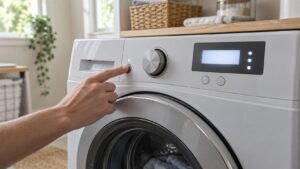
OC (also shown as OE) on a Samsung washer is an overflow problem — the control board has detected water rising above the level it expects for the current cycle and stops the fill to prevent flooding, rather than continuing to add water blindly.
What triggers an overflow reading
Because this is a safety-oriented problem, Samsung’s washers err on the side of stopping rather than risking a real overflow, so OC can appear from a genuine excess-water condition or from a sensor misreading one. Common causes include:
- A water inlet valve that’s stuck partially open, continuing to let water in even after the fill should have stopped
- A kinked, disconnected, or leaking pressure-sensor hose, causing the board to misjudge the actual water level
- Excessive suds from using too much or the wrong type of detergent, which can be misread by the level sensor as higher water than is actually present
- A failing water-level (pressure) sensor reporting an inaccurate reading regardless of actual water level
What to check first
Turn off the water supply valves behind the washer and power the unit off at the breaker for about a minute — this stops any active overfill immediately and lets you inspect safely. Check that you’re using an amount and type of detergent appropriate for the machine, since Samsung front-load and high-efficiency top-load washers need low-sudsing detergent; excess suds is one of the more common, easily fixed causes of this code.
If OC continues with correct detergent use and the water supply behaving normally, the inlet valve or pressure sensor likely needs testing. Both components are internal to the washer’s cabinet and involve removing panels to access safely, which is best handled by a technician.
Our washer repair service diagnoses Samsung overflow and fill-valve failures. Manufacturer resources: samsung.com/us/support.
Independent resource — not affiliated with Samsung Electronics.