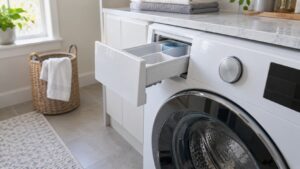
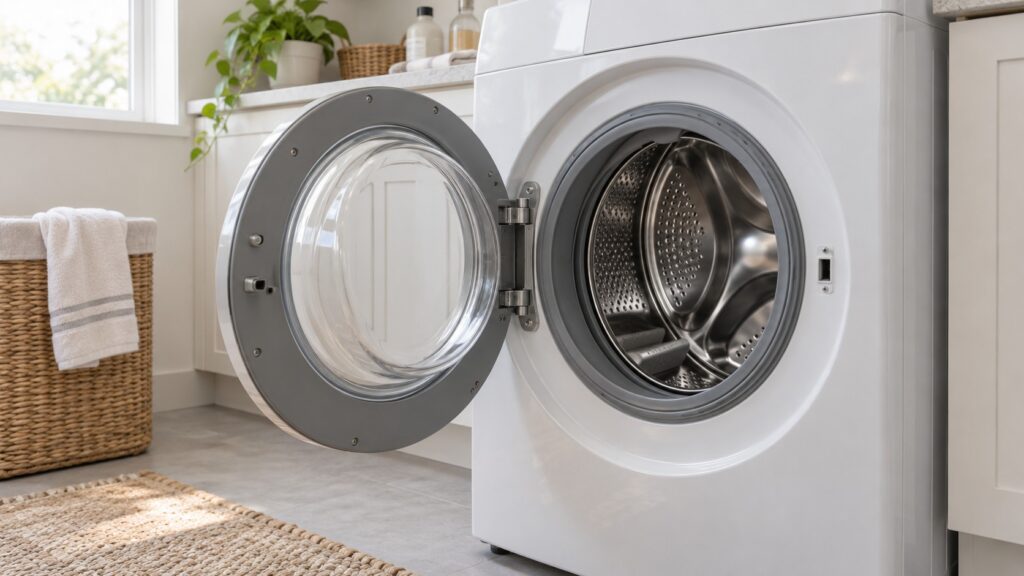
Samsung washer door seal cleaning means wiping the rubber gasket around the door, including the underside of its folds, and leaving the door ajar so it dries; the detergent drawer needs a separate wash because residue collects there too. Both jobs take a few minutes and are the manual part of washer care that a Self Clean+ cycle does not fully do for you. A damp gasket and a residue-coated drawer are the usual sources of the musty smell that owners of front-load washers describe. How the drawer releases on your model is shown in your owner’s manual, and the steps below stay with the safe general method.
How do you clean a Samsung washer door seal?
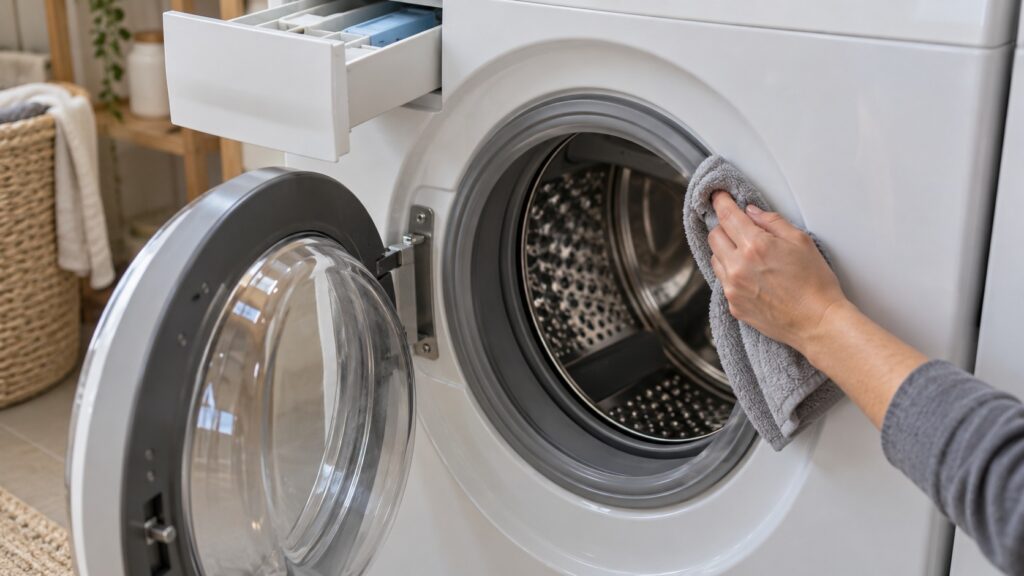
Switch the washer off and open the door fully. The rubber seal forms a ring with deep folds, and water, lint, hair and detergent settle at the bottom of those folds. Peel the seal back gently with one hand and wipe the folds with a cloth dampened in warm water with a little mild dish soap, working all the way around the ring. Look closely at the lowest part, where water pools. Use a soft toothbrush or similar soft brush for stubborn film in the creases. Rinse the cloth and wipe again with plain water, then dry the seal with a clean towel. Do not use abrasive pads or sharp tools, since a nick in the seal can leak.
If you see dark spots, wash them with the same soap and water. Check for coins, small socks and other items hiding in the folds. A seal that is torn, cracked or permanently deformed should be replaced by a technician rather than patched.
How do you clean the detergent drawer?
Pull the drawer out until it stops, then release it the way the owner’s manual shows for your model. Many drawers lift or press at a release point, but do not guess or force it. Take out any inserts, such as the fabric softener cup or the liquid detergent divider, if the manual says they come out. Wash the drawer and the inserts under warm running water with mild soap and a soft brush, and rinse them. Detergent residue in the drawer is a common cause of the mildew smell people blame on the drum, as our guide on how to maintain a Samsung washer notes.
Then look into the empty drawer cavity with a flashlight. Wipe the visible surfaces with a damp cloth and remove any caked buildup with a soft brush. Do not spray liquid into the cavity or push anything deep into it, because the water inlets and the electronics are close behind. Let everything dry, refit the drawer and push it in fully.
How often should you clean them?
Wipe the seal and leave the door ajar after laundry as a habit, and give the seal and the drawer a proper wash when you run Self Clean+. Our Samsung Self Clean+ guide says the cycle is typically run every 20 to 40 loads, about once a month for a household doing several loads a week (your manual has the final word), and that is a good moment to do the manual cleaning. A household that uses a lot of detergent or fabric softener, or that washes mostly in cold water, may need to clean the drawer more often, because residue builds up faster.
Why does the washer smell even after you clean the seal?
Several things produce a smell, and the door seal is only one of them. Too much detergent leaves film in the drum and the drawer. A damp drum that is shut up between loads grows odor. The drain path is another source: a sharper smell that stays after the drum and seal are clean can come from a clogged filter or drain. Our guide to the Samsung washer troubleshooting covers those branches. Use the amount of detergent your manual recommends, and do not mix cleaning products; in particular, never combine bleach with other cleaners in the drum or the drawer, because the fumes can be dangerous.
What problems can the seal and drawer cause?
A dirty seal can leave marks on clothes and can hold enough water to cause a smell. A seal that is not sitting correctly, or is damaged, can leak at the door, so watch for water on the floor in front of the washer after a cycle. A drawer that is jammed with residue may not dispense properly, and detergent can remain in the compartments. If you see water leaking from the washer, stop using it and check the hoses and the drain connections. If water reaches an outlet or the cord, switch off the breaker at the panel while standing on a dry floor and do not pull the plug from a wet outlet. Do not open any panel yourself. Our Samsung washer care tips list more habits that keep calls away, and the Samsung washer repair page explains how a visit works.