
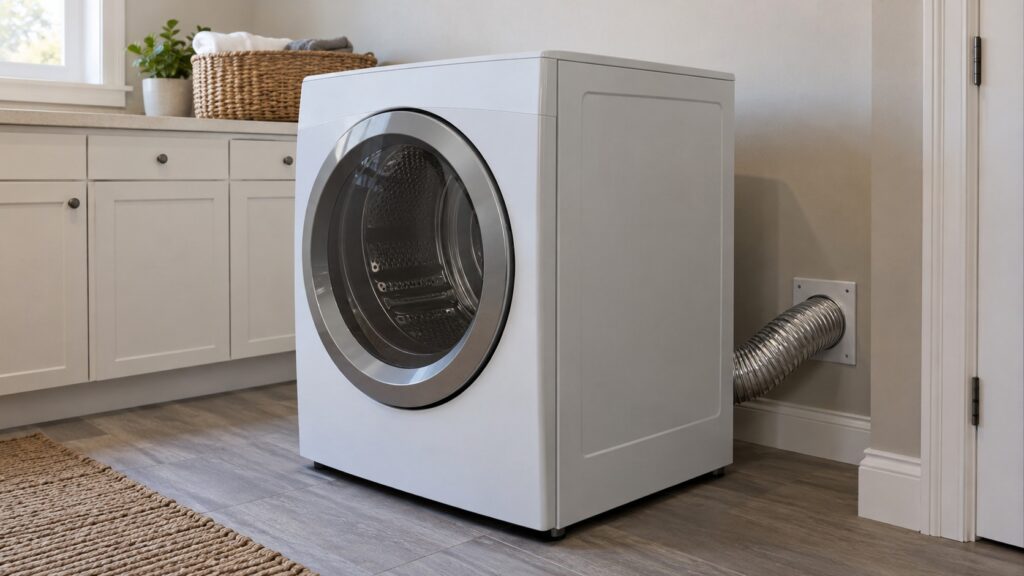
A Samsung dryer vent duct should be rigid or semi-rigid metal, 4 inches across, as short and straight as possible, joined with foil tape and not screws, and ending at an outside hood with a damper. Plastic or foil accordion duct, long runs and sharp elbows trap lint and heat, make loads take twice as long and are a fire hazard. Check the maximum run length in your manual before you move the dryer in.
The dryer itself is only half of a dryer installation. The other half is the path the hot, damp air takes to get outdoors, and that path decides how well and how safely the machine works. A Samsung dryer can be perfect and still take two cycles to dry a load because the vent behind it is crushed, too long or clogged. This guide covers the Samsung dryer vent duct: what to use, how long it can be, how to route it, how to connect it and how to check it once the dryer is running. For electrical and gas hookups, follow the manual, and use a qualified electrician or gas fitter for those connections.
What kind of duct should I use for a Samsung dryer?
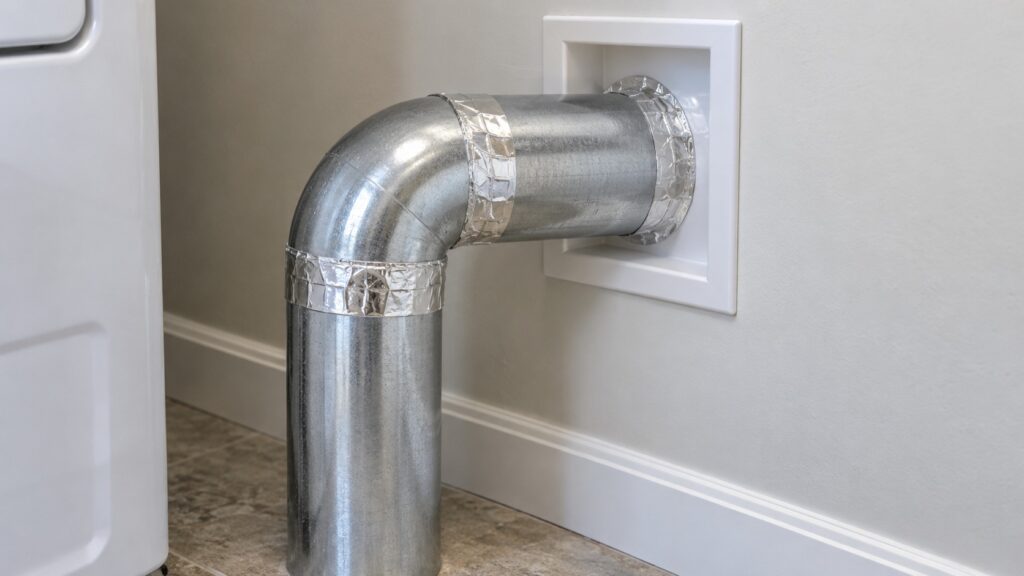
Use rigid metal duct, or semi-rigid aluminum duct where you must make a short flexible connection. The standard diameter is 4 inches, and the duct should match the dryer’s outlet. Avoid white or silver plastic accordion duct and thin foil duct. Their ridges catch lint, they crush easily and some of them can ignite, which is why building codes in many areas ban them. If you need a flexible piece to connect the dryer to the wall, keep it as short as you can and use a metal one, ideally only the last foot or two.
Join sections so that the male end points in the direction the air flows, which keeps lint from catching on the joints. Seal the joints with foil tape rated for ducts, not with screws that poke into the airstream, because screws collect lint and form a plug over time.
How long can the vent run be?
Every dryer manual states a maximum equivalent length, and the figure is not just the length of the pipe. Each elbow counts as extra length, so a short run with several bends can exceed the limit as easily as a long straight one. Many dryer manuals use a rule of a long maximum run with a few feet deducted for each 90-degree elbow, but the numbers differ between models, so use the page in your Samsung manual and do the arithmetic honestly.
Plan the shortest path. Going straight out the back wall is better than going up, over and out the roof. Use a single gentle elbow in preference to two tight ones. If the run is too long, a rigid duct with smooth bends keeps airflow better than a flexible one, but at some point you need a different route or a booster fan approved for dryers. Do not install a booster fan unless the manual allows it.
Where does the vent go, and what does it need at the other end?
The duct must end outdoors, never in an attic, a crawl space, a garage or inside a wall. The outside end needs a hood with a damper, which opens when air flows and closes when the dryer stops, to keep out rain, pests and cold drafts. Do not cover the hood with mesh: a screen clogs with lint within weeks. Make sure the hood is not blocked by snow, shrubs or a fence.
Pay attention to the gap behind the dryer. A dryer pushed hard against the wall crushes the elbow or the transition duct. Leave the space the manual recommends, or use a recessed dryer vent box set into the wall, which lets the dryer sit closer without pinching the duct. Samsung dryers usually allow venting out the back, and some allow side or bottom exits, so check the options in the manual before you cut any holes.
What else should I confirm during installation?
Electric Samsung dryers, the DVE models on this site, need a dedicated 240-volt circuit with the correct cord for the outlet; gas models, the DVG family, need a gas supply with a shutoff valve and a regular 120-volt outlet for the controls. A gas line should be connected and leak-tested by a qualified gas fitter, and a 240-volt circuit by an electrician. If you smell gas at any time, leave the house and call your gas company from outside.
Level the dryer so it does not walk or rattle: adjust the feet until it does not rock and check from side to side and front to back. Then run a short cycle on air or low heat, go outside and check that air comes out of the hood. If the exhaust feels weak, something is wrong in the run. Clean the lint filter before every load; our guide to the Samsung dryer moisture sensor explains another small habit that keeps cycle times honest.
How do I tell that the vent is the problem?
Signs include loads that need two cycles, clothes that are hot but still damp, a laundry room that feels warm and humid, a burning smell, and lint around the dryer or on the outside hood. A weak vent can also let the dryer run hot, and some models then show a temperature-related message; the pages for HC and tC say what each one reports, so read the page for your code before you replace parts. Our Samsung dryer HE code guide covers a related heating fault, and the dryer troubleshooting guide helps you separate a vent problem from a heater or sensor problem.
Clean the duct at least once a year, more if you dry heavy loads, and schedule a professional cleaning if the run is long. If the vent is clear and the dryer still struggles, a technician can test the heater, sensor and thermostat. See Samsung dryer repair or schedule a visit.