A samsung waterwall dishwasher does not spray from a rotating arm at the bottom of the tub. It sprays from a bar that slides from side to side beneath the lower rack, throwing a moving wall of water across the load. That single design difference changes what needs cleaning, what gets in the way, and which error code the machine shows when something does.
How does the WaterWall spray bar actually work?
On a conventional dishwasher a wheel spins and flings water outward, so coverage depends on the arm making a full turn without obstruction. WaterWall replaces the lower wheel with a bar that runs the width of the tub and moves along a track from front to back, pushing a continuous sheet of water upward as it goes.
The advantage is even coverage: every part of the rack receives the same treatment rather than whatever the arm happened to sweep. The trade is that the mechanism must move freely along its whole travel, every cycle, and that it needs to know where it is. Both requirements have a maintenance cost that a spinning arm does not.
The position signal comes from a reflective strip on the underside of the tub. When that strip is clean, the sensor reads the bar’s travel reliably. When a film of detergent residue, grease or hard water scale builds over it, the readings degrade before they fail outright — which is why performance usually drops for a while before any code appears.
What does error code 7E mean on this dishwasher?
The code page on this site describes 7E as a water wall or vane movement problem on compatible models, and lists what tends to trigger it: food debris or a dropped item blocking the bar’s rail so it cannot slide fully, a reflective sensor strip that has become dirty or coated in film, the bar sitting slightly off its track after careless loading, and a loose connection at the drive.
Three of those four are housekeeping. That is unusual for an error code and it is good news — most 7E calls are resolved by cleaning a rail and a strip, not by replacing a part. The 7E code page carries the full component list, and the model page for the Samsung DW80R7060US shows 7E among the codes that generation reports.
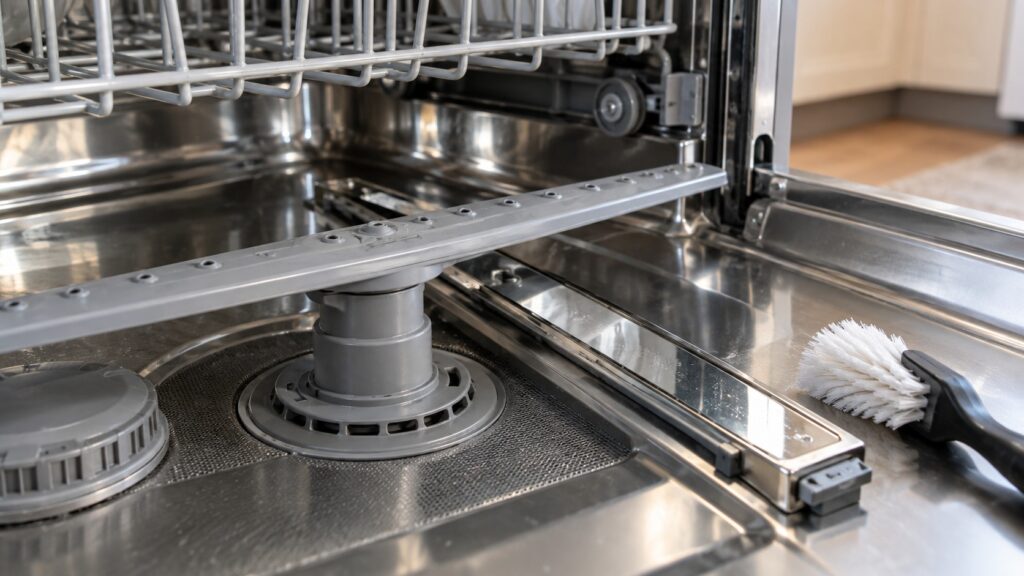
How do I clean the rail and the sensor strip?
Do this with the dishwasher off and cool, and take the lower rack right out of the tub so you can see what you are working on.
- Slide the bar by hand along its full travel. It should move smoothly from one end to the other with light, even resistance. A catch at one point is where the debris is.
- Clear the rail. Olive pits, fruit stickers, twist ties and shards of glass are the usual finds. A soft brush and a damp cloth are enough; do not lever anything with a screwdriver.
- Wipe the reflective strip. Warm water, a drop of dish soap and a microfiber cloth. If a white haze remains, a cloth dampened with white vinegar will lift scale. Abrasives permanently dull the surface the sensor reads.
- Check the spray slots on the bar. Hold it up to the light. Blocked slots leave a stripe of dirty dishes down one side of the rack.
- Refit the bar squarely and slide it once more before replacing the rack.
What does the filter have to do with the spray bar?
Everything, because they share the same water. The filter assembly sits in the sump and catches solids before the pump sends water back up to the bar. When the filter is clogged, three things happen at once: pressure at the bar drops, fine debris recirculates and settles on the rail, and the sump holds standing water that grows a film.
Pull the cylindrical filter with a quarter turn, lift out the flat mesh underneath, and rinse both under a hot tap with a soft brush. Most households need this every two to four weeks; a household that does not rinse plates needs it weekly. Our Samsung dishwasher maintenance guide covers the rest of the routine, including the door seal and the detergent dispenser.
Run an empty hot cycle with a dishwasher cleaner once a month if your water is hard. Scale is the slow enemy of a sensor strip, and it arrives before anyone notices it.
How should I load a WaterWall dishwasher differently?
The loading rules are not fussy, but they are specific to the moving bar, and they explain most repeat 7E calls in households that keep the machine clean.
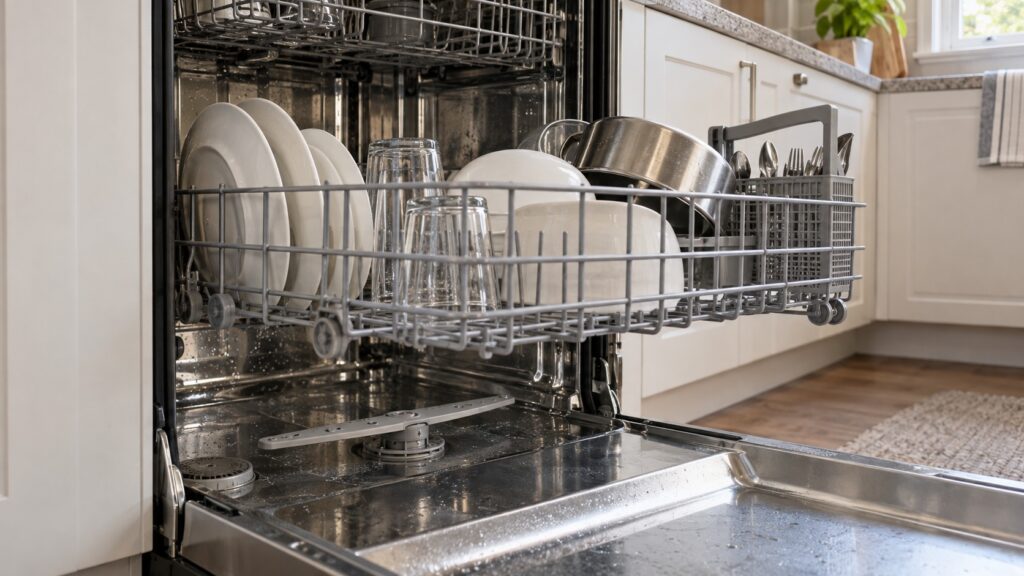
- Nothing hangs below the lower rack. A pot handle, a long spatula or a cutting board dropping through a tine gap meets the bar on its next pass.
- Large items go at the sides, angled inward. A sheet pan laid flat across the rack shields everything beneath it from a spray that travels rather than sweeps.
- Do not overload the lower rack. The wall of water needs a path upward; packed dishes turn it into a wall of water hitting dish backs.
- Light plastics get clipped or moved up. A cup that floats free can land on the rail.
- Check the third rack for drips. Items on the top tier drain onto everything below, including the rail.
The upper tiers matter here more than on a conventional machine. Our third rack guide covers what belongs up there, and if you are not sure which spray system your machine uses, the Samsung dishwasher model number guide shows how to read it off the label.
When is 7E a repair rather than a cleaning job?
Call when 7E returns after a clean rail, a clean strip and a clean filter; when the bar will not move by hand through its whole travel; when the bar moves freely but the machine still reports a position fault; or when water pressure is visibly weak with everything clear. Those point at the drive, its connector, or the sensor itself rather than at debris.
We are an independent repair company and not a factory service arm. Pricing starts from a diagnostic visit and we confirm the estimate before any work begins. Samsung dishwasher repair covers spray systems, pumps, sensors, seals and controls, and you can schedule a visit online.