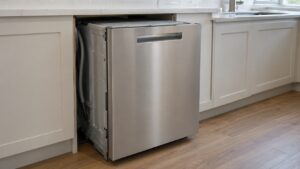
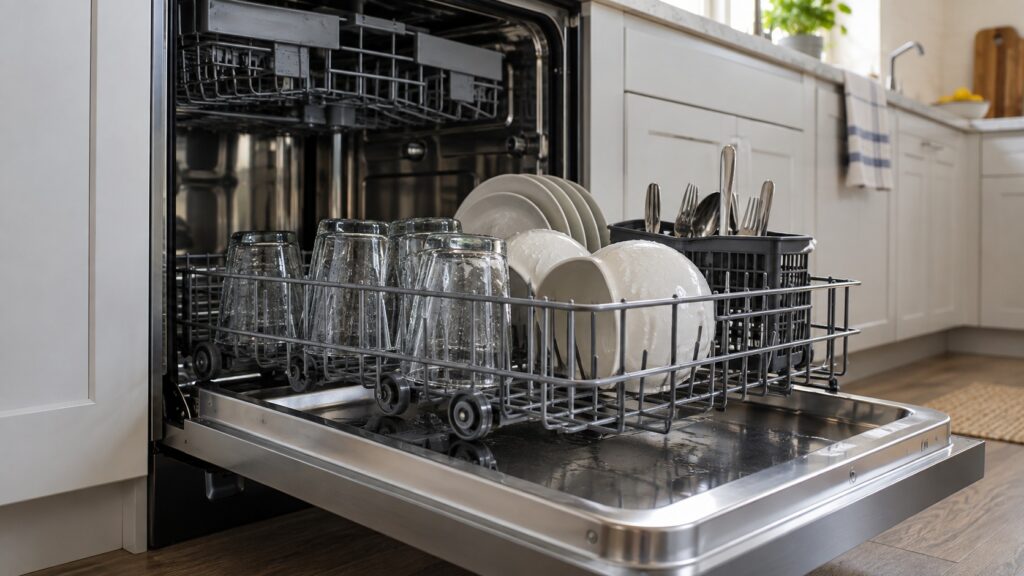
TL;DR: A Samsung dishwasher that leaves dishes wet is usually missing one of three things: rinse aid, heat or airflow. Check the rinse aid dispenser first, then the loading and the cycle option, then the water temperature and the vent. Plastics always dry poorly. If the dishes are cold and the tub is still damp after a heated cycle, the heater may need testing.
Wet dishes at the end of a cycle is one of the most common complaints about any dishwasher, and a Samsung is no exception. The good news is that the cause is almost always something simple and the fix costs nothing. This guide to a Samsung dishwasher not drying goes in the order a technician would check: the rinse aid, the load, the cycle settings, the incoming water and finally the heating and venting parts. Samsung dishwashers listed on this site include the DW80K7050US, DW80R7060US and DW80CG4021SR, and the same logic applies to them all.
Why is my Samsung dishwasher not drying the dishes?
A dishwasher dries in two ways at once. Hot final-rinse water heats the dishes so water flashes off as steam, and rinse aid makes the remaining water sheet away instead of forming droplets. Heating elements or fans may add to that, depending on the model. If any link is weak, dishes come out wet, especially plastics, which hold little heat, and the bottoms of cups, which catch water.
Is the rinse aid the problem?
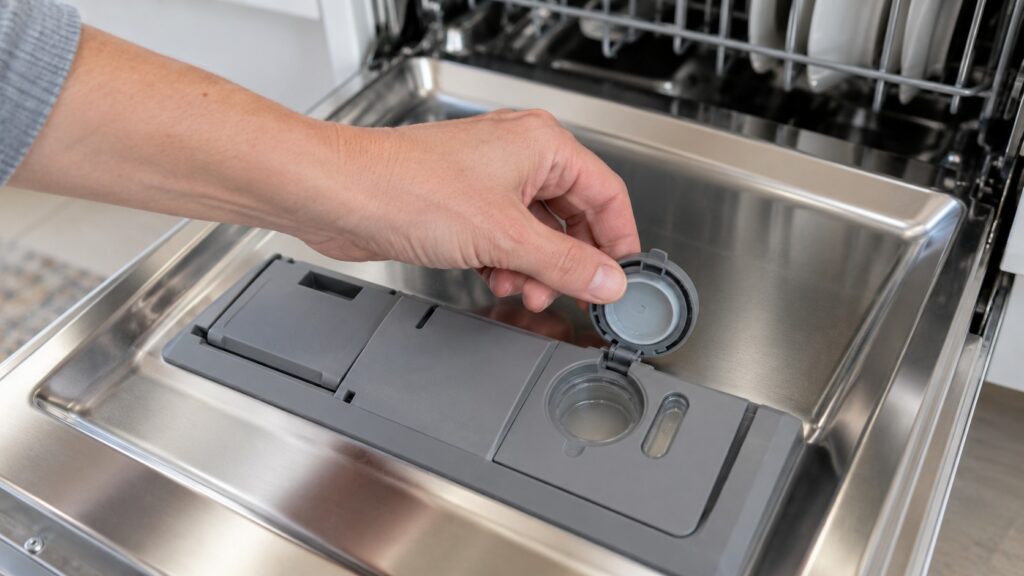
Check it first, because it takes ten seconds. Open the rinse aid dispenser, usually a small cap on the inside of the door, and look at the level indicator. If it is low or clear, refill it with a liquid rinse aid made for dishwashers. Also look at the dial or setting under the cap and raise it one step if dishes are still wet. Do not overfill, because excess leaves streaks.
Detergent matters as well. Tablets that do not dissolve completely leave residue and hamper drying. Use fresh detergent and avoid stacking dishes over the detergent door so it opens fully.
Could it be how I load the dishwasher or choose the cycle?
Yes, often. Tilt cups and bowls so they face down and angle, not flat. Keep plastic items on the top rack away from the water jets, and expect them to stay damp, since plastic does not hold heat. Do not nest spoons or let items touch, because water gets trapped between them. Leave space for air to circulate. If your model offers an extra dry or heated dry option, turn it on, and do not open the door during the final stage.
One trick is to crack the door open slightly at the end of the cycle, or after it finishes, to let steam out. It is not a fix for a fault, but it helps everything dry while you diagnose the real cause. For a related situation where the machine does not drain or leaves water in the tub, see our Samsung dishwasher troubleshooting guide.
What about the water temperature?
A dishwasher heats its own water, but it relies on the supply being reasonably hot to start. If your water heater is set low or the hot tap is far from the kitchen, the first fill may be cool and the final rinse never gets hot enough. Run the kitchen tap until it is hot before you start the dishwasher. If the dishes then dry well, the supply was the cause.
The same applies to a very short cycle. Quick or light cycles use less heat, so dishes come out damper. Use a normal cycle with heated dry for stubborn loads.
When does the heater or vent need a technician?
If the rinse aid is filled, the load is clear, the water is hot and dishes are still wet and cool, a component is likely at fault. The heating element can fail, a thermostat or sensor can misread, and a vent or fan that releases steam can stick. This site also has a code page for a high-temperature heating condition, HC on a Samsung dishwasher, which relates to the heating system. Heaters sit in the tub and connect to mains power, so testing is a job for a technician.
A leak near the base, standing water or repeated codes are more serious than damp dishes; the dishwasher error code diagnostics list the families. To keep drying performance up, follow the routine in Samsung WaterWall dishwasher care and how to maintain a Samsung dishwasher. If an older machine is struggling, the repair-or-replace guide can help. For a technician, see Samsung dishwasher repair or schedule a visit.