To get the best from a Samsung StormWash dishwasher, load it so water can reach every dish: dirty sides toward the center and the spray, nothing blocking the spray arms, tall items at the sides or back, no nesting of bowls and no hand dish soap. Scrape rather than rinse, keep the filter clean and use rinse aid. Most cloudy glasses and gritty plates come from loading and detergent, not from a faulty machine.
A dishwasher cleans with moving water, and the water goes where you let it. StormWash is the name this site uses for the spray system on many Samsung models, built around powerful rotating jets that reach from several angles. The system is only as good as the path you leave open for it. This guide gives practical Samsung StormWash dishwasher loading tips: where each kind of item goes, what to leave out, how to protect the spray arms and what to change when the results disappoint. The details of racks differ by model, so check your manual for the exact layout and use these tips as the general rules.
How should I load the lower rack of a Samsung dishwasher?
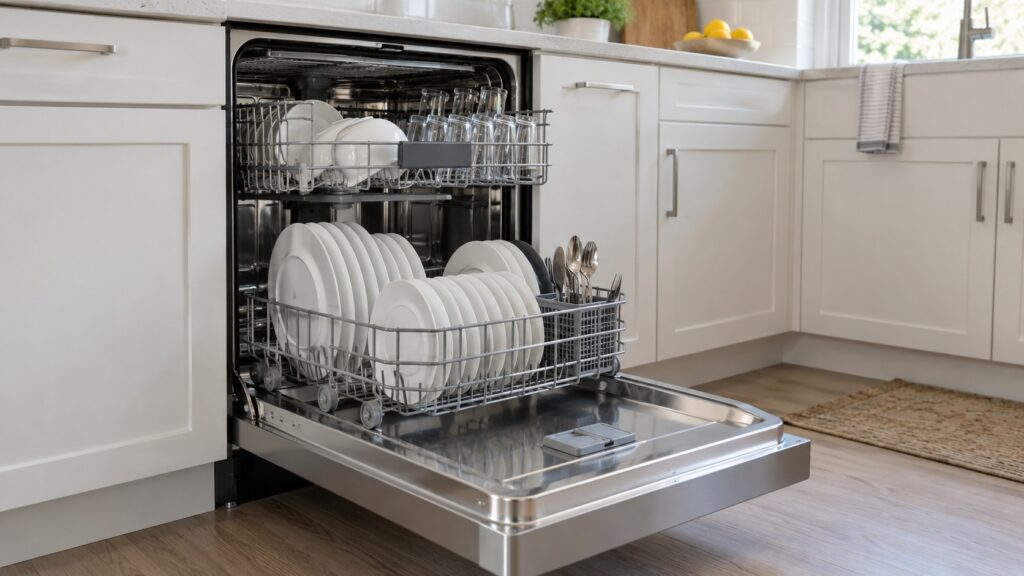
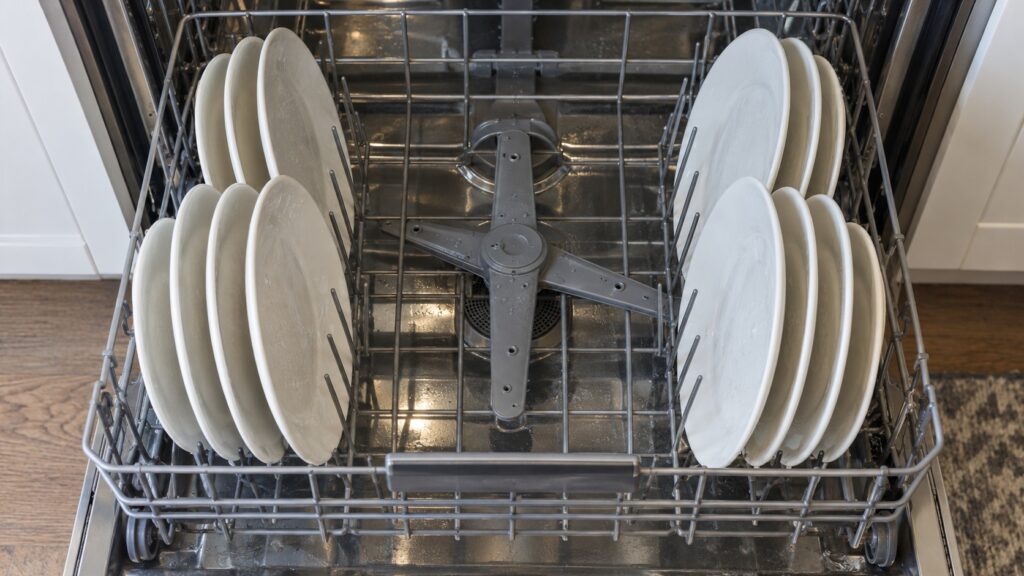
The lower rack is for the biggest and dirtiest items: plates, pots, pans and serving dishes. Face the dirty side toward the center of the tub and toward the spray, and angle the items slightly downward so water runs off instead of pooling. Leave a small gap between plates, so water can pass between them, and do not let large items form a wall at the front or back. Put pots and pans at the sides and the back, upside down, so they do not block spray from reaching the upper rack.
Keep tall items away from the center, where the bottom spray arm turns. A tall pan lying across the middle can stop the arm from rotating, and the result is a half-washed load with dry stripes and gritty food. After loading, spin each spray arm by hand and make sure it moves freely before you close the door.
What goes in the upper rack, and what is the third rack for?
Cups, glasses and small bowls belong in the upper rack. Place them face down and slightly tilted so water drains from the base instead of collecting and leaving a puddle. Do not let glasses touch each other or the tines too tightly, because glass that rubs in the wash develops scratches and cloudiness. Keep plastic items on the upper rack, away from the heating element at the bottom, and check that they are labeled dishwasher safe.
If your model has a third rack or utensil tray at the top, use it for utensils, small spatulas, whisks and flat items. Spread forks and spoons so they do not nest, and mix handles up and down so that surfaces get water. Our Samsung third rack guide explains how the layouts differ if you are still choosing or want to use yours better.
Do I need to rinse dishes before loading?
Scrape, do not rinse. Remove bones, seeds and large scraps into the trash, but leave the thin film of soil on the dish. Modern detergent contains enzymes that work on food residue, and a plate that has been fully rinsed gives them nothing to attack, which can leave a dull, etched look on glass. A fully rinsed load does not hurt the machine, but it wastes water and often does not improve the result.
The exception is baked-on or dried-in food, such as burnt cheese or oatmeal, which is worth soaking or scraping first. Also empty any liquid from cups and bowls, and shake off bulky items such as coffee grounds. Food debris in the tub travels to the filter, and a clogged filter is a common reason for gritty glasses; the Samsung WaterWall dishwasher care guide shows how to clean it, and the dishwasher maintenance guide adds the monthly routine.
Which detergent and rinse aid should I use?
Use a good-quality dishwasher detergent, pods or powder, and follow the dose on the package. Too little leaves soil, and too much leaves a white film on glasses, especially in soft water. Fill the rinse aid dispenser, because rinse aid helps water sheet off and is the main reason dishes come out dry and spot-free. Do not use hand dish soap, not even a small squirt: it foams heavily, and suds can fill the tub, leak from the door and even trigger overfill messages. If you have seen the overflow family of messages, the OE and OC pages explain them.
Water temperature matters as well. Run the hot tap at the sink until the water is hot before you start the dishwasher, so the first fill is not lukewarm. Hard water leaves spots; a periodic cleaner and a bit more rinse aid help. If dishes come out wet, the cause is often rinse aid or the heating phase, not the loading, and our Samsung dishwasher not drying guide goes through it.
When are poor results a sign of a fault?
If you load correctly, use the right detergent and clean the filter, and the dishes still come out dirty, the machine may have a problem: a clogged spray arm hole, a weak circulation pump, a fill valve that is not letting enough water in or a heater that has failed. Check the arms for blocked holes, and look for water in the bottom at the end of the cycle, which points to a drain problem. The Samsung dishwasher troubleshooting guide helps you decide which it is. If you need a technician, see Samsung dishwasher repair or schedule a visit.