
Self Clean+ is the cycle a Samsung washer runs on its own drum and tub, using hot water and higher-speed agitation to clear the detergent film, mineral buildup, and moisture that ordinary wash cycles leave behind. It runs empty, with no clothes and no detergent, and it exists because the same warm, damp environment that gets your clothes clean is also exactly the environment that lets odor-causing residue build up inside the drum over time. Running it regularly is one of the easiest habits that keeps a Samsung washer smelling clean without adding a single extra product. Knowing how the Samsung washer Self Clean+ cycle works, and how often to run it, is the difference between a machine that stays fresh and one that develops a musty smell every few months.
How do you start the Self Clean+ cycle on a Samsung washer?
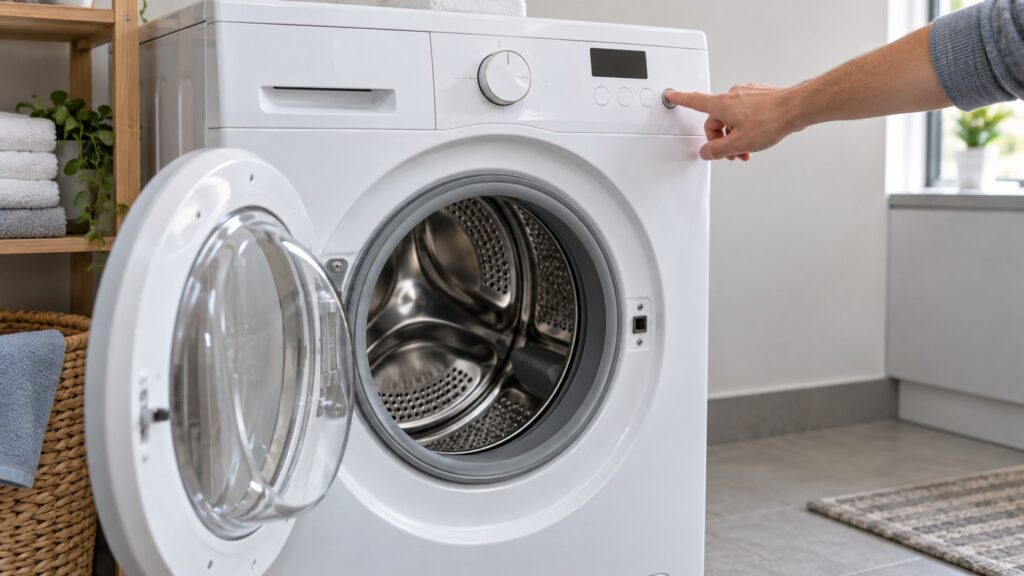
Make sure the drum is completely empty, then select Self Clean+ (labeled Self Clean on some older models) from the cycle dial or touch panel and press start — no detergent, no fabric softener, nothing added. The washer fills with hot water, runs a series of higher-speed spin and agitation stages designed to scrub the drum surface and the gasket area, and drains and rinses at the end. Because the cycle uses hot water and multiple stages, it takes noticeably longer than a normal wash, and that is expected rather than a sign anything is wrong.
How often should you actually run it?
Most manufacturers, including Samsung, suggest running the cycle roughly every 20 to 40 loads, which works out to about once a month for a household doing several loads a week. Front-load washers, which seal more tightly around the door and trap more moisture between cycles, benefit from running it slightly more often than a top-load machine. If your washer’s display shows a Self Clean reminder icon, that is the machine’s own load counter telling you it is due — it is worth acting on rather than dismissing, since the reminder is based on actual cycle count, not a guess.
What happens if you skip it for months?
Skipping Self Clean+ for an extended stretch does not damage the washer, but it lets detergent film, fabric softener residue, and mineral deposits from hard water build up on the drum and around the gasket, which is the direct cause of the musty smell people associate with front-load washers. The buildup can also start showing as a light residue on dark clothing, particularly around the collar and cuff areas that touch the drum surface most. A washer that has gone six months or more without a clean cycle usually needs two or three consecutive runs to fully clear the residue, rather than clearing it in one pass.
The smell itself is worth paying attention to because it changes with the cause. A flat, musty smell that is strongest right when you open the door points at drum and gasket residue, exactly what Self Clean+ targets. A sharper, sulfur-like smell that lingers even after a clean cycle is more often coming from the drain path rather than the drum, and no amount of extra Self Clean+ runs will fix a smell that is not coming from the surfaces the cycle actually cleans.
Should you use a cleaning tablet with Self Clean+?
A washer-drum cleaning tablet dropped into the empty drum before starting the cycle can help in hard-water areas or if odor has already built up, since the tablet’s cleaning agents work alongside the hot water and agitation. It is not required for routine monthly use — running the cycle empty with just hot water is enough to prevent buildup if you run it consistently. Save the tablet for the first run after a long gap, or for a machine that already has a persistent odor, rather than using one every single time.
What other habits keep the drum from needing Self Clean+ as often?
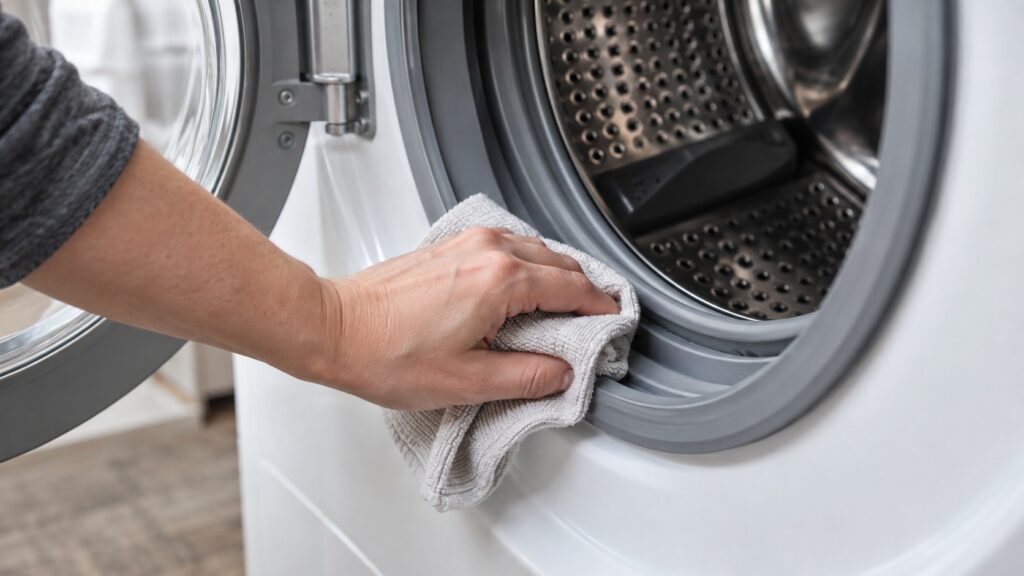
Leaving the washer door cracked open between loads, rather than closing it immediately after the cycle ends, lets the drum air out instead of trapping the moisture that feeds odor-causing residue. Wiping down the door gasket with a dry cloth after a load, especially around the folds where lint and detergent collect, catches buildup before it reaches the point Self Clean+ has to work hard to remove. Using the manufacturer-recommended amount of detergent — not more — also reduces how much film is left behind each wash, since excess detergent is one of the biggest contributors to the residue Self Clean+ is designed to clear.
When is a smell not something Self Clean+ can fix?
If odor persists after two consecutive Self Clean+ cycles with a cleaning tablet, the cause may be sitting somewhere the cycle does not reach well, such as the drain pump filter or a partially blocked drain hose, rather than the drum itself. A washer that also shows slow draining, standing water at the end of a cycle, or an error code alongside the smell is describing a different problem than routine buildup. See our Samsung washer dC error code guide if a door-lock related code appears, and our washer care tips for the rest of the routine habits that keep service calls down.
If Self Clean+ and a cleaning tablet have not resolved a persistent odor or a slow drain, that usually points at the pump filter or drain path rather than the drum. We are an independent Samsung repair service, and you can schedule Samsung washer repair or book a visit and describe what you have already tried.