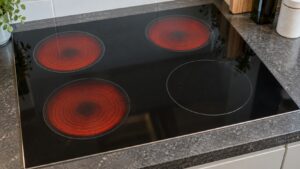
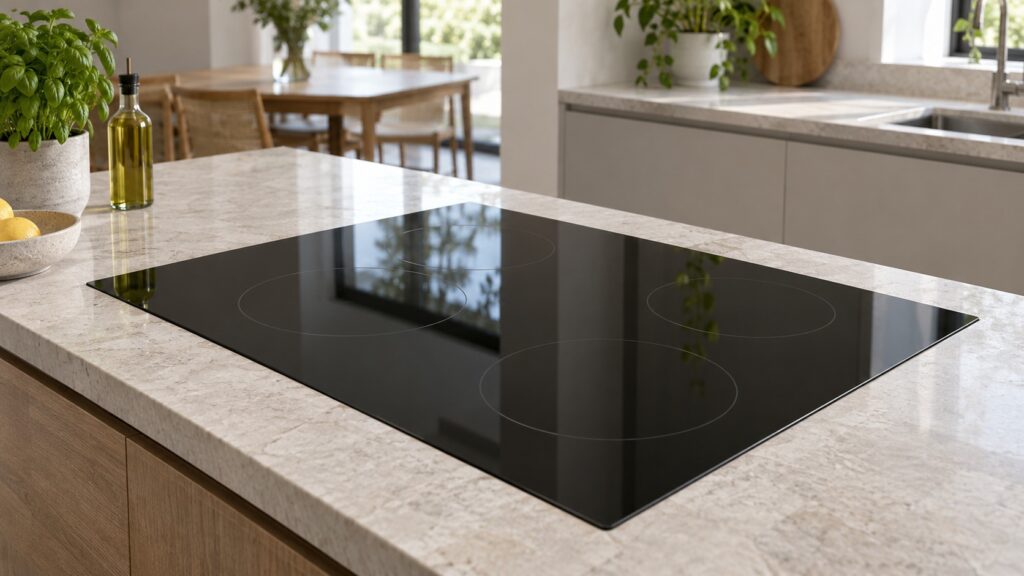
Planning a Samsung induction cooktop cutout comes down to three things you settle before anyone cuts stone or wood: the opening must match the template for your exact model, the space under the cooktop must stay clear so its electronics can breathe, and the power must come from a dedicated circuit installed by a licensed electrician. Our Samsung installation pages are specific on all three, but they give no dimensions, so every number must come from your model’s installation manual.
How do you plan a Samsung induction cooktop cutout?
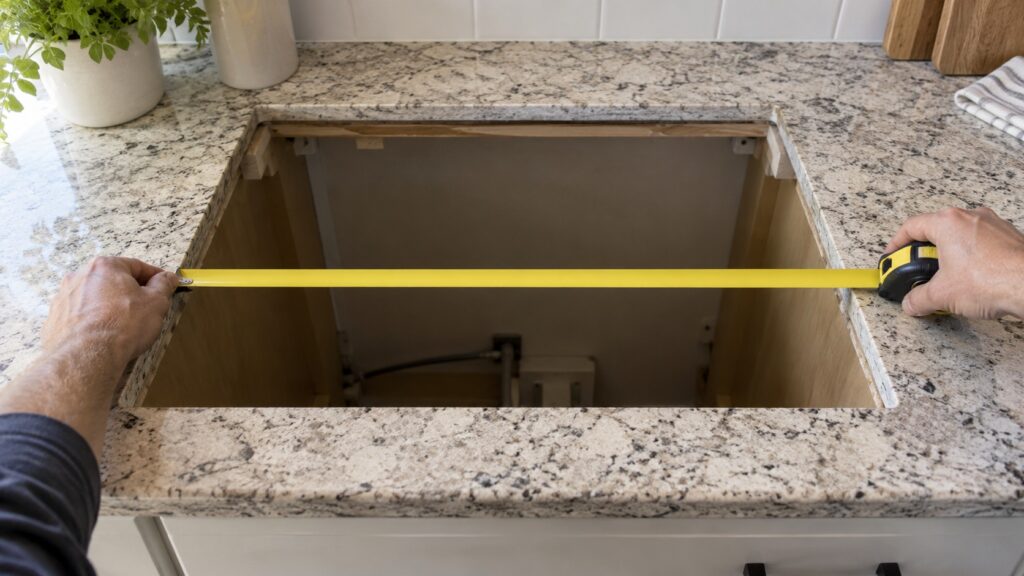
Start with the exact model number on your cooktop or in the order paperwork. The models listed on this site include the NZ36M9880UB, NZ30M9880UB, NA36N6555TS and NZ24T4360RK, and each has its own installation manual and template. This site lists them simply as Samsung cooktops and does not say which are induction and which are radiant, so do not assume the type from the model prefix; your manual states it. Our pages say that cooktops require a specific countertop cutout with defined clearance to the front edge and side walls, and that you should confirm the installation matches the template for your exact model. Do not rely on a width in the model number or on a measurement of the old cooktop, because the new unit may not use the same opening.
Give the template to whoever cuts the countertop, and ask them to check the cut against the cooktop before the cooktop is set in. A cutout that is too tight can put stress on the glass surface as it expands and contracts with heat, and our installation checks page says this can occasionally contribute to cracks that look unrelated to normal use. See our guide to Samsung cooktop installation checks before repair if you are diagnosing an existing unit instead.
What does the power supply need?
Cooktops are hardwired to a dedicated 240-volt circuit, according to our pages, and induction models draw significant current across multiple zones when several are used at once. An undersized circuit or a loose connection at the junction box can make zones underperform, cycle unexpectedly or trigger communication problems between the control board and the touch panel. The circuit rating for your model is in the manual and on the nameplate. This wiring should only be handled by a licensed electrician or qualified technician. Do not open the junction box or touch the wiring yourself, and follow your manual on whether the circuit may be shared.
What clearance do you need under the cooktop?
Under an induction cooktop sit a control board and coil drivers that generate heat, and they need clearance underneath so cooling air can circulate. A cabinet or drawer installed without the specified clearance can cause heat-related problems over time. A drawer directly below the cooktop must also not interfere with the junction box or the wiring access. Our C-24 code page lists blocked ventilation underneath the cooktop as a common reason the control reports the surface temperature rising too fast. Plan the cabinet below before the cooktop is ordered, and keep drawer liners and stored items clear of the vents.
If you plan a downdraft ventilation system, it needs its own duct run and clearance beneath the countertop, separate from the cooktop’s own electrical and cutout requirements. Our pages note that the downdraft duct should not share an undersized circuit with the cooktop.
Does the countertop trim or edge matter?
It does. Induction cooktops are more sensitive to nearby metal objects and countertop material than radiant ones. Metal trim or an improperly grounded nearby appliance close to the cooktop’s edge can interfere with pan detection on the nearest zone, producing a persistent underlined u even with good cookware. Ask your installer about trim and material before the cut. The perimeter also needs to be sealed: a cooktop that is not sealed around its edge lets spills seep beneath the glass and reach the touch control ribbon, a common cause of erratic touch response that looks like a control failure.
What should you do after the cooktop is in?
Wipe the glass thoroughly with a soft cloth before first use, because protective film residue or installation dust can cause minor touch sensitivity in the first few uses. Then test each zone with a pan that passes the magnet test, a flat, magnetic pan base matched to the zone size. Our pan detection tips explain the test. If a zone shows a code or will not detect a known-good pan, do not dismantle anything: that points to a part, or to the install, and an inspection comes first. A technician can check both. See the Samsung cooktop repair page for what a visit covers.
Who should be on site during the install?
Several trades are involved: whoever cuts the countertop, the cabinet installer who sets the space underneath and the licensed electrician who connects the power. Each depends on the other’s work, and a mistake in one shows up as a symptom in another. A cut that is slightly off can stress the glass, a drawer that is too deep can block wiring access and a loose connection can look like a failed control board. Put the model’s installation manual on the counter, tick each requirement off in order and keep the manual afterwards for any later service call.